
Coding Error Types & Resolution: Comprehensive Resource
Coding errors do not just cause denials. They create rework loops, delayed cash, compliance exposure, and a reputation problem for the coder and the organization. The fastest way to level up is to stop treating errors as “random mistakes” and start treating them as predictable patterns with repeatable fixes. This resource breaks down the most common medical coding error types, how they show up in edits and payer responses, and the exact resolution workflows that reduce repeat denials and protect audit readiness.
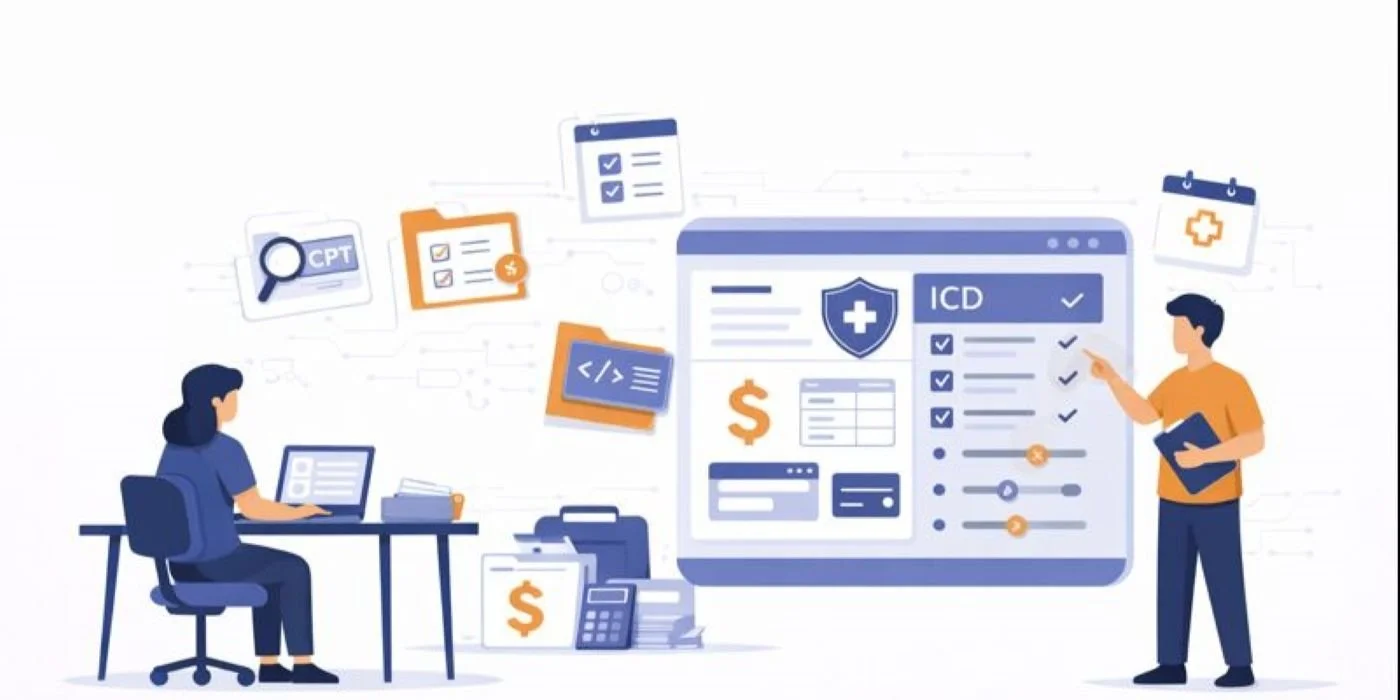
1. Coding error types: how they appear, why they repeat, and what they cost you
A coding error is any mismatch between documented clinical reality, payer billing rules, and what actually gets transmitted on the claim. That mismatch can be clinical, technical, administrative, or policy-based, and each category has a different fix. The danger is that coders often chase the symptom. They fix a denial line item but never correct the process that created it, so the same error repeats with the next provider, the next payer, and the next batch.
To resolve errors consistently, you need a vocabulary that connects what you code to how claims are processed. Start by tightening your workflow language using the medical claims submission terminology guide and the coding software terminology reference. When you understand how a claim moves from charge capture to payer adjudication, you stop guessing and start diagnosing.
The 4 most common root causes behind repeat coding errors
1) Documentation and coding misalignment.
Most “coding mistakes” are not actually coding mistakes. They are documentation gaps that force coders to infer. That is why strong collaboration with CDI matters, especially when E and M levels, procedure indications, and medical necessity are under scrutiny. Use the clinical documentation integrity terms guide to build a shared language for queries, clarifications, and defensible coding decisions.
2) Payer-specific policy ignorance.
Two payers can respond differently to the same code set. One may require a modifier. Another may require a supporting diagnosis. Another may deny due to local coverage policies. If you want consistent resolution, your workflow must include policy checks and denial pattern tracking. This becomes even more important as Medicare and Medicaid billing regulations evolve and as upcoming regulatory changes tighten compliance expectations.
3) Claim assembly and data errors.
A perfect code can still deny if the claim is assembled incorrectly. Missing NPI, wrong taxonomy, incorrect POS, incomplete units, missing referring provider, and inconsistent demographics can all trigger edits that look like “coding issues” but are actually submission issues. That is why your error-resolution process must include a claim assembly checklist grounded in the claims submission terminology guide and your system’s features from the coding software terminology guide.
4) Compliance drift and automation blind spots.
As organizations adopt AI, auto-coding suggestions, and predictive denial tools, coders can get pushed into a reviewer role without realizing it. That increases risk if you accept outputs without validating documentation, modifiers, and medical necessity rules. Keep your decision-making aligned with coding compliance trends, watch the direction of AI in revenue cycle management, and track where analytics is heading through predictive analytics in medical billing.
A coder who can identify the category of error in under two minutes is a coder who gets promoted. That speed comes from pattern recognition, not “working harder.”
2. The major categories of coding errors and how to spot them fast
Your first job in error resolution is classification. If you cannot label the error type, you will pick the wrong fix and waste days. The best coders use a triage framework that maps directly to payer behavior and internal processes.
Category A: Clinical coding errors
These are errors where the code set does not match the documented clinical story.
Diagnosis selection and specificity failures.
This includes unspecified codes used when specificity exists, incorrect laterality, missing manifestations, and sequencing errors. These problems are prevented by better documentation alignment and better coder checklists. Build your documentation alignment using the clinical documentation integrity terms guide and strengthen your clinical code confidence through ICD focused resources such as ICD 11 coding guidelines and targeted references like ICD 11 neurological disorders.
Procedure selection errors and bundling mistakes.
These show up as bundling denials, duplicate billing, or overpayment recoveries. You prevent them by understanding procedural code families and payer edits, especially in high-risk specialties. Use specialty references like cardiology CPT coding and emergency medicine CPT coding to sharpen pattern recognition when similar codes cluster.
Category B: Policy driven errors
These are not “wrong codes.” They are codes that do not meet payer policy requirements.
Medical necessity and coverage criteria failures.
This is where payers say the service is not covered, not reasonable, or not supported. The fix is rarely “change the CPT.” The fix is often a better diagnosis pointer, better documentation, a corrected claim format, or an appeal that maps documentation elements to policy expectations. This matters even more under evolving Medicare and Medicaid billing rules and increasing scrutiny described in upcoming regulatory changes affecting medical billing.
Compliance related errors.
These include upcoding, unbundling, and patterns that resemble abuse. Even if unintentional, repeated errors can trigger audits and repayment demand. Keep your resolution aligned with fraud waste and abuse terminology and watch evolving enforcement pressure in coding compliance trends.
Category C: Claim assembly and operational errors
These errors happen after the coding decision is made.
Provider, patient, and claim field issues.
NPI mismatches, taxonomy issues, missing referral details, wrong POS, and missing attachments often show up as rejections or generic denials. These are solved with a clean claim workflow, not a different diagnosis code. Coders who understand the operational side win because they can fix errors in minutes using the claims submission terminology guide and platform features described in the coding software terminology guide.
Remote workflow risks.
Distributed teams often split responsibility across registration, coding, billing, and denial management, and that creates handoff failures. If your organization is remote heavy, align your prevention plan with remote workforce management and the market shifts described in future remote billing and coding jobs.
The key skill here is speed with accuracy. You want to identify whether the denial is clinical, policy, or operational before you touch anything.
3. Resolution workflow: triage, correct, resubmit, appeal, and prevent recurrence
A good resolution process has five stages. If you skip a stage, you either lose money or you create repeat errors.
Step 1: Triage the error with denial intelligence
Start by identifying if the claim was rejected, denied, or pended. Rejections usually mean format or field problems. Denials usually mean policy or coding issues. Pend means documentation is missing. Use your system to capture the denial reason code, payer remark, and claim history, then map it to the correct team action. This is where the claims submission terminology guide helps you translate payer language into operational fixes.
If you want to reduce repeat denials, you need to track patterns. Modern teams use analytics to do this, and coders who can interpret pattern data become leaders. Build that lens through predictive analytics trends and connect it to automation described in AI in revenue cycle management.
Step 2: Confirm documentation support before changing codes
Never change codes just to make a denial disappear. That is how compliance risk is created. Confirm whether documentation supports the original coding, then decide whether the fix is a corrected claim, an appeal, or a documentation query. Build consistent query discipline using clinical documentation integrity terms and specialty coding references for clarity in complex cases like cardiology CPT coding or emergency medicine CPT coding.
Step 3: Choose the correct resubmission method
Different error types require different claim actions.
Corrected claim.
Use when claim fields, modifiers, units, or diagnosis pointers need adjustment, and payer rules allow correction.
Void and rebill.
Use when payer requires a full reversal and replacement, often in cases of duplicate billing or major claim structure errors.
Appeal.
Use when coding is correct but payer policy interpretation, medical necessity, or documentation review is wrong. Strong appeals map documentation to policy and address payer reasoning directly. Audit readiness supports strong appeals, so use the financial audits guide and compliance mindset from coding compliance trends.
Step 4: Document the fix and the root cause
You are building institutional memory. When a denial repeats, your root-cause notes are the fastest shortcut to prevention. This is how advanced teams build denial playbooks and reduce error rates quarter after quarter. If you want to move into analyst or lead roles, this skill matters as much as coding accuracy, especially as described in how new regulations impact coding careers.
Step 5: Implement prevention controls immediately
Do not wait for the quarterly training. Fix at the point of failure.
Add checklists to templates.
Create payer-specific modifier rules.
Build “top denial reasons” dashboards.
Train providers on missing documentation elements.
Update system edits.
These prevention moves align with the future direction of the industry described in future skills medical coders need and the future of medical coding with AI.
4. High impact denial scenarios: how to resolve fast without creating compliance risk
Some denials are “easy fixes.” Others are traps. The trap is when a team tries to fix denials by changing codes without aligning documentation and payer policy. That creates long-term compliance risk and short-term chaos. The goal is fast resolution with defensible logic.
Scenario 1: Medical necessity denials that look like coding errors
If a payer denies a service as not medically necessary, the fix may be diagnosis linkage, documentation support, or policy alignment. Start by confirming the correct diagnosis pointer and that the diagnosis reflects the real indication, then verify documentation includes the elements needed for coverage.
This is where your knowledge of payer rules matters. Build your payer awareness with future Medicare and Medicaid billing regulations and track evolving expectations in upcoming regulatory changes. Then build strong appeal logic using audit principles from the financial audits guide.
Scenario 2: Bundling denials where modifier use becomes risky
Modifier errors are a top denial driver and a top audit trigger. The mistake is applying a modifier because “it usually works.” The correct approach is to confirm documentation supports a distinct service, separate site, separate encounter, or required circumstances, then apply the modifier only when policy allows.
If you want to sharpen procedural accuracy, lean on specialty CPT resources like cardiology CPT guidance and high-volume settings like emergency medicine CPT codes. Then keep your compliance frame tight using fraud waste and abuse terminology and broader coding compliance trends.
Scenario 3: Rejections that waste time because teams treat them as denials
A rejection is usually a format or data issue and should be fixed and resubmitted quickly. The longer it sits, the more likely it becomes a timely filing denial. Coders who understand this protect cash flow by escalating operational issues early, especially in remote teams where handoffs are fragile. Align your work with remote workforce management and the trends in future remote billing and coding jobs. Use the claims submission terminology guide to standardize how you label and route these issues.
Scenario 4: Audit triggered corrections and overpayment risk
When errors are discovered internally, the resolution path can include refunds, corrective action plans, retraining, and tighter controls. This is where coders must understand compliance language and avoid defensiveness. Strong audit readiness and clean documentation support your role and reduce escalation.
Build a compliance resilient mindset using coding compliance trends, tie actions to audit principles in the financial audits guide, and understand how compliance affects career growth in how regulations impact coding careers.

5. Prevention systems that cut coding errors permanently
If you want to stop living in rework, you must build prevention systems. The best prevention systems do not rely on “try harder.” They rely on controls that make the right action easy and the wrong action hard.
Build a denial intelligence loop
Track the top denial reasons, their root causes, and the fix type. Then build a playbook per payer. Analytics makes this scalable. Modern organizations use trend detection to catch rising denial patterns early, which is why knowledge of predictive analytics is becoming a core skill for advanced coders and leads.
As AI becomes more common, coders who can validate AI suggestions will be trusted. Stay ahead by understanding AI in revenue cycle management and what is predicted in the future of medical coding with AI.
Standardize checklists at the point of coding
A checklist is not a beginner tool. It is a control system.
Diagnosis specificity checklist
Modifier justification checklist
Units and time-based rules checklist
POS and telehealth rules checklist
Documentation completeness checklist
Build checklist language using clinical documentation integrity terms and system capability language using coding software terminology.
Improve CDI partnership to eliminate guesswork
Coding errors collapse when documentation improves. The fastest way to reduce coder stress is to standardize provider education and query workflows. CDI vocabulary helps you ask better questions, reduce vague notes, and protect audit defensibility. Use the CDI terminology guide and tie it to compliance principles in coding compliance trends.
Strengthen remote team handoffs
Remote teams can be high performance, but only when roles and handoffs are standardized. Coders should know where to route issues, how to tag rejection versus denial, and how to document fixes so billing teams can act fast. Use remote workforce management and future remote coding trends to align your workflow to what employers are moving toward.
Align prevention with regulatory change
As rules tighten, old habits become risk. A prevention system must include monitoring and updates, not just training once per year. Keep a structured update cadence tied to upcoming regulatory changes and changes in Medicare and Medicaid billing regulations.
The result is simple. Fewer errors. Fewer denials. Better audit posture. Higher trust.
6. FAQs
-
The most common denial drivers are diagnosis and procedure mismatches, missing or incorrect modifiers, medical necessity failures, units and time errors, POS mistakes, and claim field issues like NPI or taxonomy mismatches. The mistake is treating all denials as “coding issues.” Many are claim assembly issues that require a different fix path. Use the claims submission terminology guide to separate rejections from denials, and use coding software terminology to leverage system edits. Keep your compliance lens tight through coding compliance trends.
-
Correct a claim when the data is wrong, such as modifiers, units, diagnosis pointers, POS, or missing claim fields. Appeal when the coding is correct and documentation supports the service but the payer denies due to policy interpretation, medical necessity judgment, or incomplete review. Strong appeals map documentation to payer logic and use evidence, not emotion. Improve appeal quality through clinical documentation integrity terms and build audit-ready evidence practices via the financial audits guide.
-
Only use modifiers when documentation clearly supports the criteria and payer policy allows it. Avoid habit modifiers and avoid “it usually works” logic. Build a modifier checklist tied to documentation, and run periodic audits on modifier patterns. Specialty references help you understand common code pair traps, such as cardiology CPT guidance and emergency medicine CPT codes. Maintain compliance discipline through fraud waste and abuse terminology and coding compliance trends.
-
Create a denial intelligence loop: track top denial reasons, tie each to a root cause category, then implement one prevention control per category. That can be a checklist, a system edit, a CDI education push, or a payer rule update. Make it visible with dashboards so behavior changes. This is where analytics accelerates improvement, so study predictive analytics in medical billing and the automation direction in AI in revenue cycle management.
-
Remote teams need standardized routing rules, consistent tagging, clear ownership, and a single source of truth for payer rules and denial fixes. Coders should document root cause and fix type in a structured way so billing teams can act immediately. Use remote workforce management to align roles and handoffs, and track where the market is heading with future remote billing and coding trends. Build tool literacy through coding software terminology.
-
AI can reduce errors by flagging inconsistencies, suggesting code families, and predicting denial risk. It can also create new errors when coders accept suggestions without validating documentation and payer rules. The winning approach is using AI as a second set of eyes inside compliant workflows, not as a replacement for judgment. Track the direction using AI in revenue cycle management and future skills medical coders need, plus the longer horizon in the future of medical coding with AI.
