
Online Resources and Communities for Medical Coding Exam Prep
Most people don’t fail medical coding exams because they “didn’t study enough.” They fail because they studied the wrong way: too much passive reading, too many random resources, no feedback loop, weak codebook navigation, and communities that generate confusion instead of clarity. Online resources can dramatically improve exam prep—but only if you know how to separate signal from noise and turn content into performance. This guide shows you how to build a high-value, exam-ready online prep system using communities, tools, and workflows that improve speed, accuracy, and confidence without wasting months.
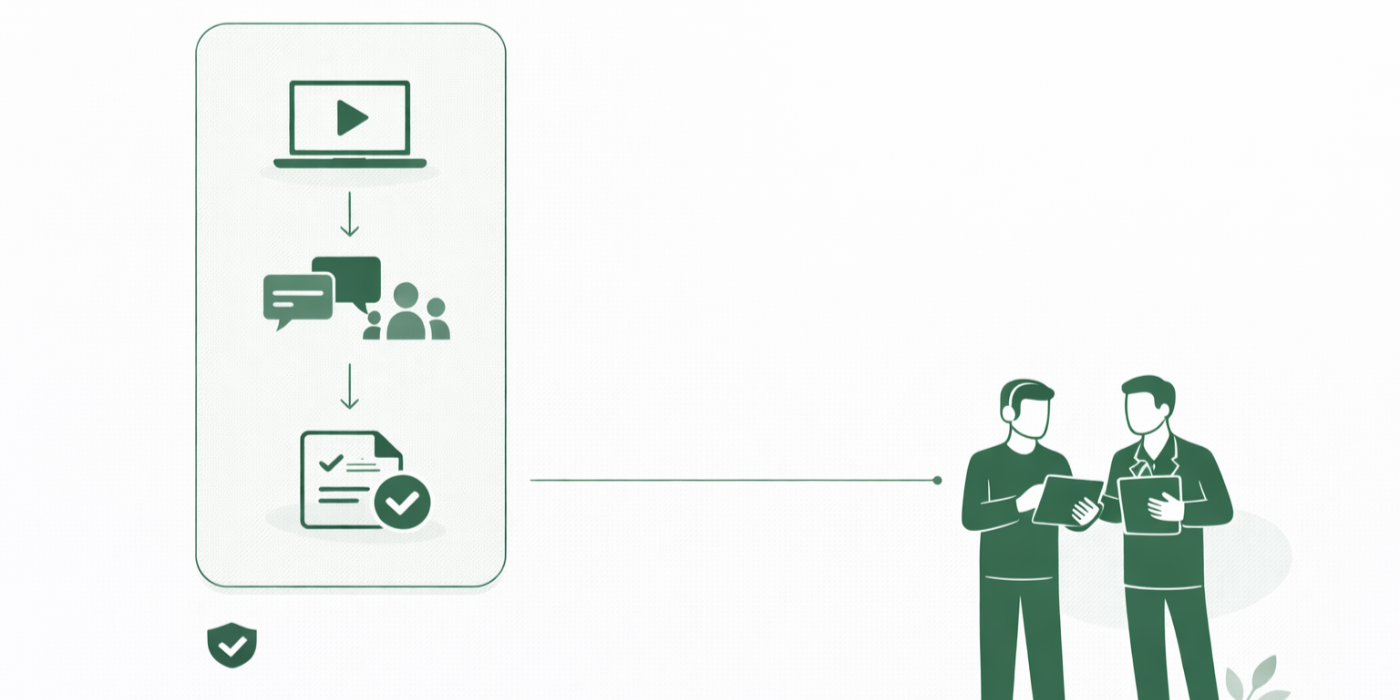
1) Why Most Online Exam Prep Fails (and How to Make It Work)
Online exam prep is powerful because it gives you access to lectures, practice questions, coding discussions, study groups, and expert explanations at scale. But that same abundance creates the biggest risk in coding prep: resource overload. Learners collect PDFs, videos, flashcards, forums, and “tips” from influencers, then mistake exposure for mastery. They feel busy but don’t improve on timed coding decisions. If your prep system doesn’t produce better accuracy under pressure, it’s not prep—it’s content consumption.
Medical coding exams test more than memory. They test judgment, rule application, codebook navigation, attention to detail, and your ability to avoid traps. That means your online resources must help you train how to think, not just what to memorize. A strong prep system should build:
guideline interpretation discipline
documentation-to-code reasoning
error detection habits
timing strategy
consistency under exam pressure
That’s why exam prep improves faster when learners also build foundational literacy in adjacent coding realities. Even while studying for exams, understanding medical coding regulatory compliance, Medicare documentation requirements for coders, and coding edits & modifiers strengthens your decision logic. You start recognizing why certain answer choices are risky or unsupported instead of guessing based on pattern memory.
Another common failure: learners join communities that are active but not accurate. A busy forum can feel helpful while quietly teaching shortcuts, myths, or outdated advice. In coding exam prep, bad advice is expensive because it creates “sticky errors” that are hard to unlearn. The safest communities are the ones that encourage source-based reasoning, explain why an answer is correct, and distinguish exam strategy from real-world coding workflows. You also want spaces that teach disciplined terminology—something AMBCI references like encoder software terms, EMR documentation terms, and clearinghouse terminology can reinforce as you build professional vocabulary.
The biggest shift that turns online prep into pass-ready prep is this: stop asking, “What resources should I use?” and start asking, “What skill gap is blocking my score?”
Examples:
Slow codebook lookup speed
Modifier confusion
Documentation interpretation errors
Timed test fatigue
Overthinking and answer changes
Weak rationale for elimination choices
When you identify the actual bottleneck, online resources become tools instead of distractions. A video becomes useful if it fixes one recurring error. A community becomes useful if it helps you validate reasoning and catch blind spots. A question bank becomes useful if you review misses like a coding auditor instead of chasing score dopamine.
Online prep works best when it mirrors professional coding discipline: structured workflow, QA review, and error trend tracking. That same mindset is what eventually helps coders reduce denials and protect revenue in real jobs using tools like CARCs, RARCs, and revenue cycle KPIs. In other words: if you build your prep correctly, you’re not just preparing to pass—you’re preparing to perform.
Online Medical Coding Exam Prep Resources & Communities Map (30+ Rows): What They’re Good For, Risks, and Best Use
| Resource / Community Type | Best For | Common Risk / Mistake | Best-Practice Use |
|---|---|---|---|
| Official credentialing body exam pages | Exam blueprint, rules, policies, updates | Relying on third-party summaries instead | Use as source of truth for format and eligibility |
| Official study guides | Structured exam-topic coverage | Reading passively without practice | Turn each chapter into timed drills + review notes |
| Official practice exams | Exam-style readiness testing | Saving them all for the end | Use baseline + mid-point + final simulations |
| Exam policy FAQs | Proctoring, timing, allowed materials | Getting surprised on test day | Review 1-2 weeks before exam and again before test day |
| Credentialing body forums/communities | Exam tips, peer support, clarifications | Assuming all peer answers are authoritative | Verify contested advice against official guidance |
| Instructor-led online courses | Guided progression, accountability | Confusing “completion” with readiness | Pair with independent timed practice and error logging |
| Recorded lecture libraries | Concept review, repeat learning | Binge-watching without retrieval practice | Watch to fix one weakness, then test immediately |
| Question banks | Volume practice and pattern recognition | Chasing score instead of analyzing misses | Track error types and review rationales deeply |
| Timed mock exams | Speed, stamina, pacing strategy | Taking untimed “practice” only | Simulate exam conditions weekly in later phases |
| Live review bootcamps | Final consolidation and confidence | Using bootcamp as your only prep | Use after baseline study, not before |
| Study Discord/Telegram groups | Peer accountability and quick doubt resolution | Noise, anxiety, misinformation, comparison spirals | Mute channels; use for targeted questions only |
| Facebook study groups | Community support, resource sharing | Outdated posts and unverifiable “tips” | Search before posting; verify advice with current materials |
| Reddit threads | Candid learner experiences and strategy ideas | Mistaking anecdotes for exam facts | Use for perspective, not policy or rule authority |
| YouTube coding channels | Quick refreshers and concept visuals | Watching generic “tips” instead of practicing | Use playlists to target exact weak domains |
| Short-form social clips (Reels/TikTok) | Motivation and mnemonic ideas | Oversimplification of rules and exceptions | Never use as final source for coding rules |
| Flashcard apps | Terminology, guidelines, high-yield concepts | Memorizing terms without application | Pair every card set with coding scenarios |
| Spaced repetition platforms | Retention over long prep windows | Using premade decks with errors | Create your own deck from missed questions |
| Shared study notes drives | Condensed summaries | Unknown accuracy and outdated content | Use only as supplement after verification |
| Accountability partners | Consistency and morale | Talking about studying instead of studying | Use shared score goals + timed sessions |
| Virtual study rooms | Focus blocks and routine | Passive attendance with no measurable output | Enter each session with 1 metric goal |
| Coding case discussion groups | Reasoning practice and documentation interpretation | Learning shortcuts that ignore compliance | Prefer groups that cite guidelines and rationale |
| Mentor Q&A sessions | Unblocking persistent confusion | Asking vague questions with no examples | Bring exact missed question patterns and notes |
| Email newsletters | Updates, reminders, exam motivation | Inbox overload and distraction | Filter into one folder; review weekly only |
| Blogs on coding concepts | Foundational understanding and examples | Reading broad content without exam alignment | Use to strengthen weak concepts, not replace practice |
| AMBCI dictionaries/guides | Terminology mastery + workflow context | Using only dictionary-style learning | Use for precision, then apply in timed questions |
| Spreadsheet error logs | Pattern tracking and targeted improvement | Logging scores only, not root causes | Track domain + mistake type + fix rule |
| Digital planners / habit trackers | Consistency and schedule visibility | Overplanning without execution | Keep plans simple and output-based |
| Pomodoro/focus apps | Attention management | Fragmented study without deep practice blocks | Use longer blocks for coding drills and review |
| Test-day simulation checklists | Reducing exam-day mistakes | Ignoring logistics until exam morning | Practice setup and timing protocol in advance |
| Paid “guaranteed pass” groups | Often marketing-heavy motivation | False confidence and poor content quality | Verify curriculum, outcomes, and refund terms carefully |
| AI tutoring/chat tools | Explanations, summaries, custom drills | Blind trust in incorrect answers | Use for reasoning support; verify with official materials |
| Peer-led mock review sessions | Explaining logic aloud (great for retention) | Confident but inaccurate peer explanations | Require citations to guidelines/rationales in discussion |
| Career forums/job boards (late prep phase) | Motivation + employer expectations | Distracting from exam prep too early | Use after consistent mock scores are stable |
2) The Best Types of Online Resources for Medical Coding Exam Prep (and What Each Should Do)
The “best” online resource is not the most popular one—it’s the one that solves a specific prep problem. Most learners need a stack, not a single source. A high-performing stack usually includes five categories: source-of-truth materials, structured learning, active practice, feedback/community, and performance tracking.
1) Source-of-truth resources (non-negotiable)
These are the official exam blueprint/policies, credentialing body guidance, and approved materials. Even if you use ten third-party resources, your prep should still anchor to the official exam structure and rules. This prevents a common mistake: spending weeks mastering topics that are low-yield for your exam while undertraining high-weight domains. If you’re serious, build your study plan directly from the exam blueprint and use every other resource to support that plan.
This “anchor first” approach is exactly how professional coders work in real environments: official guidance first, secondary interpretation second. That same mindset later protects you when working with medical coding regulatory compliance, Medicare documentation requirements, and coding logic topics like edits & modifiers.
2) Structured learning resources (courses, modules, lecture libraries)
These help you understand concepts in sequence—especially if you’re new or returning after a long gap. Their job is to reduce confusion, not replace practice. The danger is learners overvaluing “clarity” and undervaluing performance. You can feel crystal clear after a video and still miss the same question type under time pressure.
Use structured resources to fix conceptual gaps, then immediately apply them in timed questions. If you just watch, you’re building familiarity—not exam skill. To deepen conceptual understanding, AMBCI glossary-style resources can help sharpen terminology in areas that often confuse exam candidates, such as CDI terms, EMR documentation terms, and problem lists in documentation.
3) Active practice resources (question banks, timed mocks, case drills)
This is where passing scores are built. Question banks are useful only if you review misses properly. Too many learners answer 100 questions, check the score, and move on. That is one of the fastest ways to plateau. The real value is in post-test analysis:
What kind of mistake was this? (knowledge gap, reading error, timing error, rule confusion, overthinking)
What clue did I miss?
What rule/guideline would have prevented it?
How will I recognize this trap next time?
This review style mirrors real coding QA and denial prevention work. It trains habits that later help you interpret CARCs, RARCs, and performance patterns in revenue cycle KPIs.
4) Feedback resources (communities, mentors, discussion groups)
Communities are best for unblocking confusion, staying consistent, and seeing alternate reasoning patterns. They are not ideal as your final authority for rules. The best study communities have three traits:
explanations are rationale-based
members cite sources or standards
moderators correct misinformation quickly
If a group runs on “I passed, trust me” advice, treat it carefully. Experience matters, but unsupported shortcuts become bad habits. Use communities to test your reasoning, compare process, and stay motivated—not to replace source verification. This is especially important in compliance-adjacent topics and documentation interpretation, where AMBCI references like coding query process terms, SOAP notes & coding, and medical record retention/storage terms can help you maintain disciplined language.
5) Performance-tracking resources (error logs, score dashboards, study planners)
The most underrated resource in online prep is a simple error log. It turns vague anxiety (“I’m weak at coding”) into actionable truth (“I miss modifier questions when I rush stem details” or “I keep confusing documentation support vs code specificity”). Once you can name your pattern, you can fix it. Without tracking, learners repeat the same errors for months.
A strong tracking system is what transforms online prep from random effort into a results engine. It also prepares you for real job expectations, where coders are measured on quality, productivity, denial trends, and rework—not just effort.
3) How to Choose the Right Online Communities Without Getting Burned by Misinformation
Online communities can either accelerate your exam prep or quietly wreck it. The difference is not the platform (Discord, Facebook, Reddit, forums, WhatsApp, Telegram)—it’s the quality of the reasoning and moderation inside the community.
The first rule: separate emotional support from technical accuracy. A group can be fantastic for motivation and still be poor for coding logic. That’s not a deal-breaker—just know what you’re using it for. If a community helps you stay consistent, celebrate wins, and reduce isolation, that’s valuable. But technical questions should still be verified against official guidance and trusted resources.
The second rule: watch how people answer disagreements. In weak communities, arguments get settled by confidence, seniority, or “that’s how my instructor said it.” In strong communities, disagreements get settled by rationale, source references, and rule application. That culture matters because exam prep is full of tricky distractors and exceptions. You need spaces that train you to explain why, not just guess correctly once.
This same discipline becomes a career advantage later. Coders who can explain their decisions with documentation and rule logic are the ones who perform well in audits, denials, and QA reviews. That’s why it helps exam candidates—even early on—to strengthen terminology and documentation reasoning through CDI terms, EMR documentation terms, and SOAP notes & coding.
The third rule: avoid comparison traps. Many online communities unintentionally increase anxiety because learners compare timelines, scores, and study hours without context. One person says they passed in six weeks; another says they studied a year. None of that helps if it distracts you from your own score trend and weak areas. Your goal is not to match someone else’s timeline—it’s to build reliable performance. That means tracking your own metrics:
timed accuracy by domain
average time per question
repeat error categories
score stability across mock exams
The fourth rule: be careful with “exam recall” and shortcut culture. Communities that obsess over leaked-style questions, memorized answers, or rumored shortcuts can give false confidence and poor transfer of skills. Even when learners mean well, shortcut-based prep often collapses when the exam presents the same concept in a different way. You want concept transfer, not memorized pattern matching.
The fifth rule: use communities as accountability infrastructure, not as a replacement for practice. The best community habit is to post or discuss:
what you studied today
one mistake pattern you found
one rule you clarified
one timed performance metric
That format keeps you output-focused and reduces passive scrolling. It also builds the exact quality-improvement mindset that helps coders later interpret revenue leakage, RCM KPIs, and denial trends through CARCs/RARCs.
Quick Poll: What’s your biggest online medical coding exam prep challenge?
4) A High-Performance Online Study System for Medical Coding Exam Prep
If you want online resources to actually move your score, build a prep system around cycles, not endless studying. A simple and effective cycle is:
Learn → Drill → Review → Log → Retest
This keeps every resource tied to an outcome.
Phase 1: Build your core map (Week 1–2 style setup, flexible timeline)
Start by mapping the exam domains and scoring priorities. Identify what you already know and what consistently breaks your accuracy. Don’t guess—take a short diagnostic or mixed practice set and categorize your misses.
Then create a lean resource stack:
1 official source-of-truth set (exam info/blueprint/policies)
1 primary structured course or guide
1 question bank / practice source
1 community for accountability + doubt clearing
1 tracking method (spreadsheet/notion/notebook)
Anything beyond that must prove its value by fixing a real weak point. This prevents resource hoarding and keeps prep efficient.
Phase 2: Train by weakness, not by mood
Most learners choose what to study based on comfort (“I’ll do terminology videos today”) instead of impact (“I’m losing points on modifiers and documentation questions”). Online prep becomes high-value when each session targets a measurable weakness.
For example:
If you’re weak on documentation interpretation, pair practice with SOAP notes & coding, EMR documentation terms, and problem list documentation.
If you’re weak on compliance-style reasoning, reinforce with medical coding regulatory compliance, Medicare documentation requirements, and coding query process terms.
If you’re weak on payment logic/denial-thinking questions or scenario interpretation, strengthen context with CARCs, RARCs, and medical necessity criteria.
This approach gives your prep depth without drifting off-topic.
Phase 3: Turn question banks into a QA lab
Question banks are not there to “prove you’re ready.” They are there to expose your errors. Treat every missed question like a mini audit:
What did I assume?
What wording trick did I miss?
Did I rush?
Did I confuse two similar concepts?
Was this a knowledge gap or a process gap?
Then log it. The log should include:
domain/topic
error type (knowledge / reading / timing / overthinking / elimination failure)
correct rule/concept
prevention note (“Next time, check documentation support before specificity”)
This is how online prep becomes professional-grade. It mimics real coding QA and denial prevention work, where coders improve by finding error patterns, not by pretending mistakes are random.
Phase 4: Build timing and stamina intentionally
A lot of learners are “exam-ready” on knowledge but fail on pacing, fatigue, and pressure. Online prep makes it easy to avoid timed conditions because untimed practice feels productive. Don’t fall into that trap. Timed practice must be trained separately.
Use a progression:
untimed concept accuracy
short timed sets
full-domain timed blocks
full mock exams under realistic conditions
After each timed set, review not just wrong answers but slow correct answers. Slow correct answers are future misses when fatigue hits.
Phase 5: Use communities for targeted feedback, not endless scrolling
Before posting a question, do three things:
Identify the exact point of confusion.
Write what you think the answer is and why.
Ask for correction on your reasoning, not just the answer.
This gets better responses and trains exam thinking. It also helps you build confidence in your own process—critical for reducing panic and answer switching on exam day.

5) Red Flags, Scams, and Low-Value Online Prep Offers to Avoid
Medical coding exam prep is a real career market, which means it attracts real marketing—and not all of it is honest. The biggest prep mistakes are not just study mistakes; they are buying mistakes. Learners lose money, time, and confidence on flashy programs that promise certainty but deliver recycled content and shallow support.
Red Flag 1: “Guaranteed pass” promises with vague conditions
A guarantee is only meaningful if the provider clearly explains:
what the program includes
what score baseline it assumes
what “pass” means
what refund/retake support requires
what data supports the claim
If the promise is emotional (“our students always pass!”) but the terms are hidden, treat it as marketing, not evidence. Serious programs show curriculum structure, instructor qualifications, outcome definitions, and support processes.
Red Flag 2: Resource bundles with no exam alignment
Some programs sell giant bundles—videos, notes, flashcards, community access, mentorship—but never explain how the content maps to the actual exam domains. More content is not better if it’s not aligned. You want a program that can tell you exactly how it trains blueprint areas and how it measures progress. If alignment is unclear, you may spend weeks on low-yield content.
Red Flag 3: Communities built on hype, fear, or dependency
Be cautious of groups that constantly imply you’ll fail without their secret method, private notes, or insider shortcuts. Good prep communities build independence and reasoning skill. Bad ones build anxiety and dependency. If every question is answered with “buy this upgrade” or “just trust us,” walk away.
Red Flag 4: Outdated or unsupported coding advice
In exam prep communities, outdated advice spreads fast because learners repeat what “worked for someone” months or years ago. This is why you should always verify technical claims against current official materials and strengthen your conceptual base with reliable references. AMBCI guides on coding compliance, edits & modifiers, and medical necessity criteria help you spot advice that sounds confident but fails under real coding logic.
Red Flag 5: No performance tracking, only motivation
Motivation helps you start. Metrics help you pass. If a prep program gives you pep talks, daily quotes, and group accountability but no structured error review, timed strategy, or score trend analysis, it may feel good while producing weak outcomes. The real proof of prep quality is performance improvement:
fewer repeated mistakes
better timed accuracy
stronger rationale explanations
stable mock scores
Red Flag 6: No transparency on instructor competence or support quality
If you’re paying for instruction or mentorship, you should know who is teaching, what their role is, and how feedback is delivered. “Expert team” language without actual credentials, experience, or example teaching quality is a warning sign. You’re not buying inspiration—you’re buying error correction and reasoning improvement.
The safest buying mindset is simple: choose prep that makes you more independent, accurate, and consistent, not more dependent on the provider’s hype.
6) FAQs: Online Resources and Communities for Medical Coding Exam Prep
-
Start with official exam information/blueprints, one structured learning source, one strong question bank, and one reliable study community. Then add tools only if they fix specific weaknesses. Too many resources usually hurt more than help.
-
Yes—if you use them correctly. They are best for accountability, motivation, and clarifying specific doubts. They are risky when used as your final source for coding rules or exam policies. Always verify technical advice with official materials and source-based references.
-
Watch how members handle disagreements. If answers rely on confidence, anecdotes, or “trust me” instead of rationale and source references, be careful. Strong communities explain why and encourage verification. Weak communities spread shortcuts and outdated myths.
-
Practice questions (with deep review) should drive score improvement. Videos are helpful for fixing concept gaps, but passive watching alone rarely builds exam performance. A good rule: every video session should be followed by drills and error review.
-
Avoid vague “guaranteed pass” promises, giant bundles with no exam alignment, and communities that sell fear or secret shortcuts. Look for transparent curriculum mapping, instructor credibility, structured feedback, and measurable performance tracking.
-
Use them to sharpen terminology, documentation thinking, and compliance logic that improve your reasoning quality. High-value references include CDI terms, EMR documentation terms, coding query process terms, and coding compliance.
-
Use exam prep like a QA system: track errors, study root causes, practice documentation reasoning, and learn the revenue/compliance context behind coding decisions. Resources like CARCs, RARCs, and revenue cycle KPIs help you start thinking like a professional coder, not just a test taker.
