
Comprehensive Guide to SOAP Notes & Coding
SOAP notes aren’t “just clinical documentation.” They’re the raw material that determines code selection, risk exposure, and whether a payer will believe the story you billed. When SOAP notes are thin, contradictory, cloned, or missing medical necessity, coding teams get forced into defensive billing—downcoding, modifier overuse, chasing queries, and living in denial management. A strong SOAP note, by contrast, makes the claim obvious, the level defensible, and the audit trail clean—especially when it aligns with documentation standards and compliance guardrails like those in AMBCI’s guidance on Medicare documentation requirements and coding regulatory compliance.
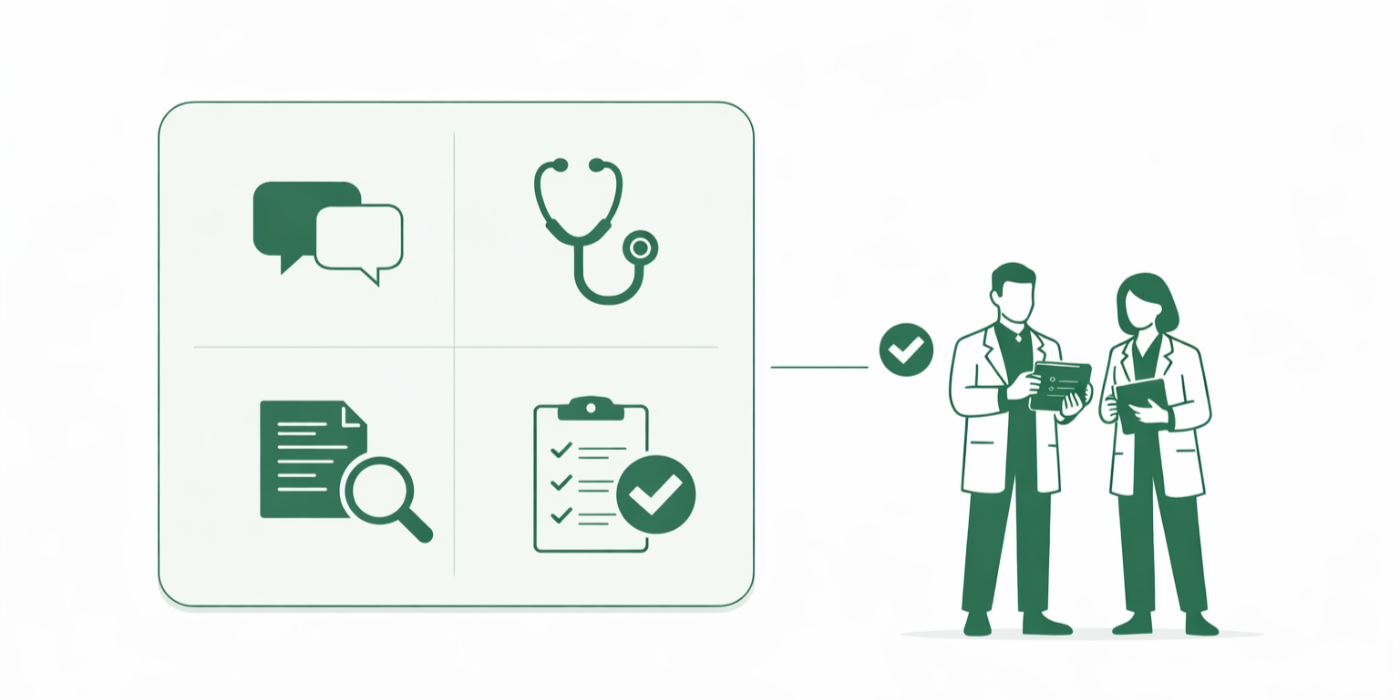
1) SOAP Notes & Coding: The “Clinical Story” Coders Must Defend
A SOAP note is only as valuable as its coding consequences. Coders don’t just translate words into codes; they translate clinical intent + medical necessity + measurable work into a claim that can survive edits, payer rules, and recoupment risk. If the note doesn’t prove “why,” you lose on medical necessity criteria. If it doesn’t prove “what happened,” CDI falls apart—especially when problem lists conflict with the plan (see AMBCI’s CDI terms dictionary). If it doesn’t prove “how it was billed,” you trigger post-pay scrutiny and revenue leakage that shows up in revenue cycle KPIs and gets traced back to documentation behaviors.
Here’s the coding reality: payers adjudicate the claim, but auditors adjudicate the note. That’s why your SOAP needs to be built like evidence, not prose. The best teams standardize SOAP capture the same way they standardize charge capture—because charge capture errors aren’t “coding mistakes,” they’re system problems (use AMBCI’s charge capture terms guide to align stakeholders on definitions). If your organization can’t even agree on what “chief complaint” means versus “problem,” you’ll bleed time into rework and denials, and those denials often get explained in payer language through CARCs and RARCs—not clinician language.
The goal of SOAP note optimization isn’t “documentation perfection.” It’s billing clarity with compliance safety. That includes aligning SOAP content with the payer’s claim processing ecosystem: eligibility and coordination issues (see COB definitions), routing and submission realities (see clearinghouse terminology), and the edit frameworks that punish ambiguity (see AMBCI’s deep dive on coding edits and modifiers). When your SOAP is structured to “answer the payer’s next question,” you reduce denials and stop playing whack-a-mole across the revenue cycle.
2) How to Code from SOAP: Turning Narrative into Defensible Codes
High-performing coding teams use SOAP notes like a structured dataset: each element should map to (1) diagnosis specificity, (2) medical necessity, and (3) billable work. Start with the “A” (Assessment) and “P” (Plan) because they define what you are billing. Then validate the “S” and “O” as evidence. When the note flows backwards—tons of subjective complaints but no clear plan—you end up with ambiguous claims and denial-prone documentation (a direct driver of revenue leakage prevention issues).
Step 1: Lock diagnosis specificity. If your ICD narrative is vague, the payer can treat the service as non-specific and unnecessary, and your remittance will reflect it through adjustment reason codes and remark codes. Coders should actively push for specificity using CDI language that clinicians recognize (use AMBCI’s CDI terms to standardize query phrasing and reduce provider friction). If your org is transitioning toward newer classification frameworks, make sure your documentation workflows won’t break under evolving standards like ICD-11 best practices—because “documentation drift” during transitions is where audit exposure spikes.
Step 2: Prove medical necessity like a payer reads it. Payers don’t pay for effort; they pay for justified care. The SOAP note must show why the evaluation, test, procedure, or management choice was medically required—exactly the concern AMBCI addresses in its medical necessity criteria guide. A solid necessity thread looks like: complaint → exam/abnormal finding → risk factors → decision → follow-up plan. When any link is missing, the payer can argue “not reasonable and necessary,” and denials multiply.
Step 3: Anticipate edits and modifier scrutiny. If your plan includes separate services (e.g., evaluation plus a procedure), your documentation must clearly separate the decision-making from the procedural work—otherwise edits and bundling logic will collapse the claim. That’s why it’s essential to train clinicians and coders together using a shared playbook for coding edits and modifiers, not scattered tribal knowledge. If your org struggles with payers, don’t ignore the submission ecosystem: a mismatch between provider data, payer data, and clearinghouse normalization can wreck clean claims (see AMBCI’s clearinghouse terminology guide and COB definitions).
Step 4: Use KPI feedback loops to fix the upstream note. Denial management alone won’t solve documentation issues; you need measurement. If your first-pass resolution, clean-claim rate, and denial categories aren’t tied back to SOAP behaviors, you’re fixing symptoms, not causes. Build dashboards with definitions aligned to AMBCI’s RCM KPIs, then review top denial codes and map them to missing SOAP elements (often: absent rationale, unclear assessment, or contradictory plans).
3) The 9 SOAP Failures That Cause Denials, Downcoding, and Audit Risk
Most “coding problems” are actually documentation problems that force coders into unsafe decisions. Below are the failures that repeatedly create denials, payer retractions, and painful internal conflict.
Cloned notes with different billing. If today’s note reads like last visit but the codes changed, it looks like upcoding—even when it isn’t. This is where compliance risk intersects with CDI and documentation integrity; align your policies with AMBCI’s coding regulatory compliance guide and train providers on how cloning creates audit optics.
Assessment-plan mismatch. “Assessment: sinusitis; Plan: MRI lumbar spine.” That contradiction is an auditor’s favorite. It also produces unnecessary services that fail medical necessity. Your coding team should treat mismatch as a stop-the-line defect—query before coding, not after denial.
No rationale for tests or referrals. Ordering isn’t evidence. Without clinical rationale, payers default to “screening” or “convenience,” then deny. Denials show up as CARC/RARC combos—train staff to interpret CARCs and RARCs so they can push back with the right documentation requests.
Vague diagnoses that can’t support procedures. “Shoulder pain” doesn’t justify many interventions unless you document severity, failed conservative management, and objective findings. This is exactly how revenue leaks: the service may be done correctly, but the note can’t defend it (see revenue leakage prevention and charge capture terminology to align documentation + billing teams).
Missing prior history that changes risk. Risk isn’t just in the plan; it’s in the patient. If anticoagulant use, immunosuppression, CKD, diabetes, or recent hospitalizations aren’t captured, you lose defensibility. Many organizations fix this by building “risk prompts” into the SOAP template and standardizing query language using the CDI dictionary.
Unclear status of chronic problems. “HTN, DM2” listed without status creates ambiguity: were these addressed? stable? uncontrolled? If they were part of the decision-making, document it; if not, don’t inflate the note. This balance matters for audit optics and aligns with payer expectations in programs that track quality/cost trends like MACRA and MIPS.
Procedure documentation missing key elements. Missing consent, technique, indication, or outcome invites recoupment. If your facility performs anesthesia-related services, ensure your documentation culture can support specialty complexity and avoid disputes by using consistent terminology (AMBCI’s anesthesia coding reference can help teams speak the same language).
Coordination failures (payer, eligibility, COB) that coders get blamed for. When coverage is wrong or COB is misaligned, claims deny even with perfect notes. But the documentation may still need to support resubmissions and appeals. Standardize how teams document payer context and use AMBCI’s COB definitions alongside clearinghouse terminology so operational fixes happen upstream.
No audit trail for “why we coded it that way.” The best coding teams document internal rationale and keep workpapers for high-risk services—because when the audit comes, the question isn’t “did you do the work,” it’s “can you prove it.” Track these processes and measure outcomes using RCM KPI frameworks so leaders fund the right documentation interventions.
4) SOAP Notes in Real Coding Scenarios: What “Good” Looks Like Under Pressure
The most dangerous SOAP notes are the ones that feel “complete” but fail under payer logic. Here’s how to design SOAP content for common high-friction scenarios.
Scenario A: High-cost imaging ordered. You need more than pain and duration. The note must show red flags, failed conservative treatment (when appropriate), relevant exam findings, and why imaging changes management. If you don’t document the decision logic, the payer can deny as not medically necessary—then you’ll see denial narratives echoed through CARCs and RARCs. The coder’s job becomes “prove the why,” and the best reference point is still the payer-facing logic described in AMBCI’s medical necessity guide.
Scenario B: Procedures + evaluation same day. Auditors look for separation: the decision to do the procedure must be documented distinctly from the procedure itself. If that separation isn’t clear, edits and bundling will collapse reimbursement and expose you to modifier misuse. Build a standard documentation template aligned to AMBCI’s guidance on coding edits and modifiers and train providers that “doing more work” doesn’t automatically justify separate billing—documentation must show it.
Scenario C: Chronic condition follow-ups. Chronic care notes often become checkbox notes that say nothing about status, control, or decisions. That’s where you lose coding defensibility and invite downcoding. The SOAP should clearly state problem status, changes, medication adjustments, monitoring, and risk factors. This also matters as reimbursement models evolve and reporting frameworks influence documentation expectations in value programs (see value-based care coding terms, plus MACRA and MIPS).
Scenario D: Specialty billing where terminology matters. Infusion/injection therapy, dialysis, and home health have documentation nuances that can sink claims if teams rely on generic SOAP templates. When your practice touches these services, align your documentation vocabulary with specialty billing language so coders aren’t guessing (see AMBCI’s guides to infusion & injection billing terms, dialysis coding terms, and the terminology approach used in the home health coding dictionary). The win here is not “more words.” It’s the right words that tie the service to medical necessity and clear plan elements.
Scenario E: Denial prevention through “submission reality” awareness. Even great notes can’t overcome broken operational pipes—wrong payer order, eligibility issues, COB issues, or clearinghouse mapping errors. But SOAP notes can make resubmission and appeal faster when they clearly document what was done and why. Teams that struggle here should standardize payer-facing language and train staff using COB definitions and clearinghouse terminology so they stop blaming coders for operational noise.

5) Building a SOAP Documentation QA System That Prevents Revenue Leakage
If your process is “code it, bill it, fight denials,” you’re paying for defects forever. A QA system fixes the upstream note so the downstream claim becomes boring—in a good way.
1) Create a SOAP “minimum defensibility standard.” Not every visit needs the same depth, but every billed visit should meet a consistent baseline: clear complaint, relevant history, focused exam or objective data, specific assessment, problem-linked plan, and follow-up. Align this baseline with the compliance expectations outlined in AMBCI’s Medicare documentation requirements and coding regulatory compliance guide. This reduces “provider-by-provider variability,” which is the silent killer of coding consistency.
2) Tie denials back to SOAP defects using structured language. Stop reporting “denials are high.” Report “denials are high because SOAP notes lack X.” Use remittance language (CARC/RARC) to categorize payer feedback and map each category to missing SOAP elements. Build staff fluency with CARCs and RARCs so denial analysis becomes operational, not emotional.
3) Monitor revenue leakage as a documentation problem—not a billing team failure. Under-documentation causes under-coding; poor linkage causes denials; inconsistent notes force conservative billing. Treat leakage as a system metric and use AMBCI’s guidance on revenue leakage prevention alongside RCM KPIs to quantify the improvement opportunity.
4) Standardize CDI queries that clinicians actually answer. If your queries feel like accusations, providers ignore them. Use CDI vocabulary and keep queries focused: “Please clarify the etiology/status/risk factor that drove your plan.” The AMBCI CDI dictionary is useful not for memorization, but for shared language that lowers friction.
5) Build an edit/modifier “documentation gate.” For the services that most commonly trigger edits, require a documentation checklist before coding. This prevents “modifier roulette.” Ground the checklist in AMBCI’s guidance on coding edits and modifiers and reinforce that the modifier is never the solution—the note is.
When this QA system is working, the wins show up everywhere: fewer denials, faster coding, less provider-coder conflict, and better predictability in cash. And that predictability is what lets organizations invest in smarter workflows, including responsible automation—especially as RCM roles evolve (see AMBCI’s future-focused resources like AI in revenue cycle trends and future skills for coders).
6) FAQs: SOAP Notes & Coding (High-Value Answers)
-
A missing “why.” Most denials are ultimately medical-necessity disputes dressed up as technical reasons. The note must connect symptoms/risk factors → decision → plan. Use a standardized approach aligned to medical necessity criteria, then track denial outcomes through CARCs and RARCs to prove where documentation is failing.
-
Use CDI-style, non-accusatory queries that ask for clinical clarification, not “coding justification.” Standardize query templates using the language framework from AMBCI’s CDI terms dictionary. Providers respond faster when the question is specific and tied to patient care decisions (status, etiology, severity, risk).
-
Not “payer language,” but payer-relevant logic: rationale, risk factors, failed conservative measures (when applicable), and clear follow-up. That’s universally defensible and aligns with Medicare documentation requirements and broader coding compliance expectations.
-
Treat modifiers as a documentation gate: require separation of services in the note (distinct work, distinct rationale, distinct documentation). Implement a checklist anchored to AMBCI’s guidance on coding edits and modifiers and audit the highest-risk service lines monthly using KPI outcomes from RCM metrics.
-
Build a denial taxonomy that maps payer feedback to SOAP defects, then quantify revenue impact (write-offs, rework hours, delayed cash). Use AMBCI’s frameworks for revenue leakage prevention and RCM KPIs to show leadership exactly how documentation improvements translate into cash and compliance safety.
-
Yes—because value programs intensify scrutiny around what was done, why it was done, and how outcomes/quality are supported. SOAP integrity becomes part of the evidence story. If your organization participates in these models, train teams using AMBCI’s references for MACRA terms and MIPS so documentation and coding stay aligned to program realities.
