
Compliance Audit Trends in Medical Coding: Exclusive 2025 Data
Accurate coding is no longer “good enough” in 2025 – compliance audits now decide whether revenue is protected or quietly leaking away. Payers, regulators, and hospital boards are all using deeper analytics to test whether your coding aligns with clinical reality, ICD-11 rules, and evolving reimbursement models. If your team is not audit-ready, you are not revenue-ready. In this guide, we’ll walk through exclusive 2025 audit trends, the patterns behind the most expensive findings, and the practical steps coders can take to stay ahead using resources like ICD-11 accuracy studies, revenue-cycle benchmarks, and denials management best practices.

1. Why 2025 Compliance Audits Are Reshaping Medical Coding
The biggest shift in 2025 is that compliance audits are no longer occasional, manual reviews. Health systems now blend payer audits, internal audits, and technology-driven “micro-audits” across every claim batch. Auditors cross-reference ICD-11 code selections with clinical documentation, reimbursement rules, and risk-adjustment methodologies outlined in resources like the hospital revenue impact reports and specialty reimbursement analyses.
For coders, that means the old distinction between “production” and “compliance” is gone. Your daily coding workflow is now directly evaluated against revenue-leakage data, common error patterns, and payers’ denial logic. The coders who thrive are those who treat every claim as if it will be audited, tying each code to specific documentation, coverage policies, and financial impact.
2. Key Compliance Audit Trends Medical Coders Must Track in 2025
In AMBCI’s 2025 dataset, three trends dominate compliance reviews. First, ICD-11 adoption has turned specificity into a measurable KPI, not a “nice to have.” Audit teams benchmark coders against resources like the ICD-11 reimbursement impact study and ICD-11 guideline dictionaries. Second, auditors now cross-link coding accuracy to revenue-cycle efficiency metrics and specialty-specific reimbursement trends, not just chart-level accuracy. Third, there is tighter scrutiny on denial root causes, drawing directly from denials management playbooks and revenue-leakage studies.
For coders, the takeaway is simple: your work is evaluated in a network of metrics, not in isolation. Aligning your day-to-day coding with these documented trends is the fastest way to avoid being “the outlier” in any audit sample.
3. Building an Audit-Ready Coding Workflow Using 2025 Benchmarks
An audit-ready workflow starts long before a payer requests records. High-performing teams anchor their process on three building blocks: shared terminology, structured documentation, and real-time feedback loops. Shared terminology comes from living resources like the medical billing dictionary, coding compliance glossary, and focused guides on claims submission terminology.
Structured documentation means that providers chart in ways that support ICD-11 logic, E/M selection, and payer policies. Coders should regularly reference DME coding guides, chiropractic billing terms, and financial audit workflows to ensure every note has the elements auditors expect.
Finally, real-time feedback loops rely on internal mini-audits that mirror the structure of original revenue-cycle reports and coding error analyses. Instead of waiting for year-end findings, leaders review samples weekly, linking results to clear coaching plans.
Quick Poll: What’s your biggest blocker to passing a 2025 compliance audit?
4. Turning Compliance Audit Findings Into Strategic Wins
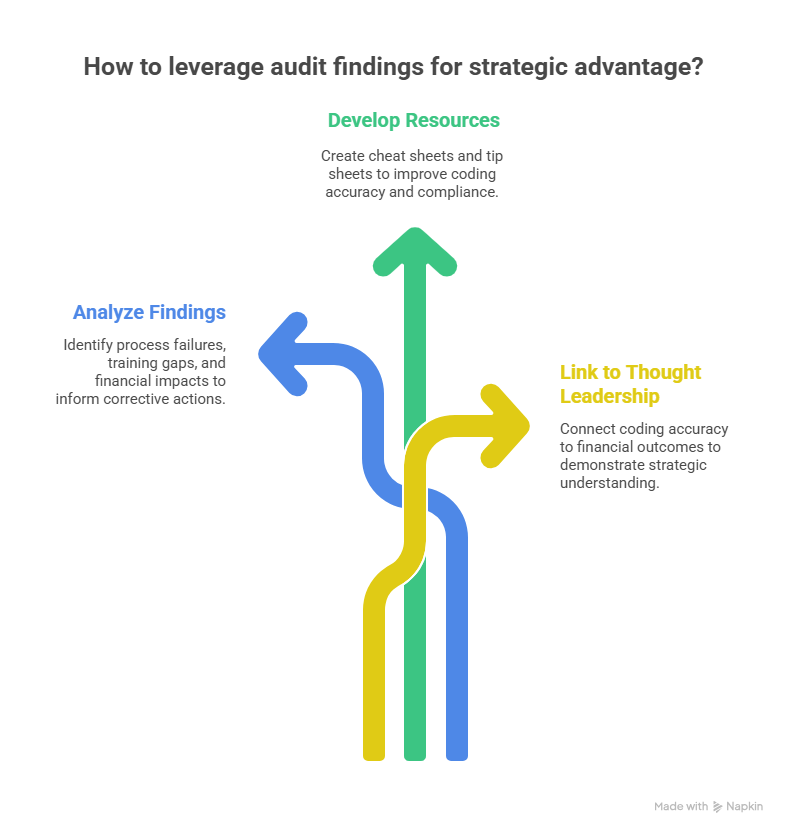
Too many organizations still treat audits as “pass or fail” events rather than a source of competitive advantage. In 2025, leading revenue-cycle teams map each audit finding to three questions: Which process failed, which training gap allowed it, and which financial metric was impacted? They then align corrective action with structured resources such as the revenue-leakage research, denials management playbooks, and future reimbursement model forecasts.
For coders, this is a career opportunity. If you can translate findings into updated cheat sheets, provider tip sheets, and cleaner claims, you position yourself as a coding strategist, not just a producer. Linking your work to thought-leadership-style content such as the impact of coding accuracy on hospital revenue report or the original ICD-11 reimbursement study shows leadership that you understand both compliance and financial outcomes.
5. Skills and Certifications That Future-Proof You Against Audit Risk
Audit-heavy environments reward coders who invest in structured education, cross-functional skills, and data literacy. A foundational step is earning a recognized medical billing and coding certification, then stacking that with role-specific roadmaps such as the CPC career guide and billing specialist salary benchmarks.
Continuous learning is no longer optional. Audit-ready coders regularly enroll in continuing-education programs and apply expert certification strategies to stay ahead of payer rule changes. Many also study future-focused content like emerging coding job roles, automation-resilient careers, and billing software innovations.
Beyond technical skills, auditors increasingly value coders who can interpret salary data by state, read financial audit guides, and participate confidently in cross-department discussions about reimbursement models and risk.
6. Compliance Audit FAQs for 2025 Medical Coders
-
ICD-11 has given auditors far more granularity to test whether your codes truly reflect the documented clinical picture. Instead of simply checking if a diagnosis is “close enough,” they now evaluate whether coders consistently reach the highest available specificity, use correct post-coordination codes, and align with official guidelines like those summarized in AMBCI’s ICD-11 guide. For coders, this means you must understand chapter-level changes, new extension codes, and how ICD-11 influences reimbursement rates. Internal audits that mirror these expectations are critical so payer audits never become your first real stress test.
-
The most expensive findings tend to cluster around systemic patterns, not one-off mistakes. Examples include persistent under-coding of E/M levels, chronic misapplication of modifiers 25 and 59, and inaccurate risk-adjustment coding that depresses capitated revenue. These patterns are often uncovered when organizations link audit results to revenue-cycle efficiency dashboards and revenue-leakage studies. The financial damage is not just recoupments; it includes lost future reimbursement, higher denial rates, and increased labor for appeals. This is why high-performing teams treat audit findings as a blueprint for process redesign, not just compliance paperwork.
-
In 2025, quarterly audits are no longer sufficient for complex organizations. Many leading systems adopt a tiered approach: monthly random samples across all service lines, weekly targeted reviews for high-risk specialties, and immediate audits after coding guideline changes. This cadence mirrors the continuous monitoring payers are using, especially around high-value areas covered in AMBCI resources such as hospital reimbursement analyses and coding error trend reports. The goal is to spot drift in your coding patterns early, remediate with focused education, and track improvement over time using consistent metrics.
-
Even in organizations with limited formal auditing, coders can protect themselves and their patients’ revenue by building personal guardrails. Start by using authoritative glossaries like the medical billing dictionary and compliance terminology guide while coding. Next, perform mini self-audits – select a sample of your own charts weekly, compare them against common error checklists, and document your findings. Finally, invest in continuing education and certification-level training focused on compliance so you can confidently defend your coding choices if questioned.
-
Compliance audits and denials management are two sides of the same coin. Audit findings reveal where your coding or documentation deviates from payer expectations; denial trends show how those deviations play out financially. Effective organizations align both data streams using resources like AMBCI’s denials management analysis and claims submission terminology guide. When auditors identify a frequent issue – for example, weak medical-necessity language – denial teams update appeal templates while coding leaders redesign workflows. This closed loop converts what could have been recurring revenue loss into a structured improvement roadmap that steadily reduces denials.
-
Roles that blend technical coding expertise with analytical and leadership skills are thriving. Examples include audit specialists, CDI-coding quality analysts, and revenue-integrity coders who can interpret results from financial audits and translate them into operational changes. Foundational credentials in medical billing and coding, followed by advanced tracks like CPC roadmaps or niche educator paths such as the medical coding educator career guide, signal to employers that you can handle complex audit discussions. Pairing these with knowledge of future-oriented job trends makes you especially valuable.
-
Audits are moving toward near-real-time analytics, where aberrant patterns trigger review before claims even reach payers. Expect tighter linkage between coding engines, clinical decision tools, and audit platforms, especially as reimbursement models shift, as outlined in AMBCI’s reimbursement-model forecasts and software innovation analyses. Coders who embrace data literacy, understand automation limits, and can collaborate with IT and compliance teams will be in highest demand. The best preparation now is to treat every coding decision as a data point that could appear on tomorrow’s dashboard – and to build your knowledge using AMBCI’s growing library of career and compliance resources.
