
Comprehensive Guide to Charge Capture Terms
Charge capture is where revenue either becomes clean reimbursement or quietly disappears. Most billing teams do not lose money because they “coded wrong.” They lose money because the service was never captured, captured late, captured without the right supporting detail, or captured in a way that cannot survive payer edits. This guide breaks charge capture down into real operational terms, not theory, so you can spot leakage fast, fix upstream workflows, and build a process that reduces denials and prevents underbilling.
If you work in billing, coding, AR, CDI, or any specialty that lives on documentation and throughput, charge capture is your control panel. It connects documentation quality, claim submission hygiene, and payer behavior into one measurable system using remits, edits, and audit proof.
1) Charge Capture: What It Really Is and Where Revenue Leaks Start
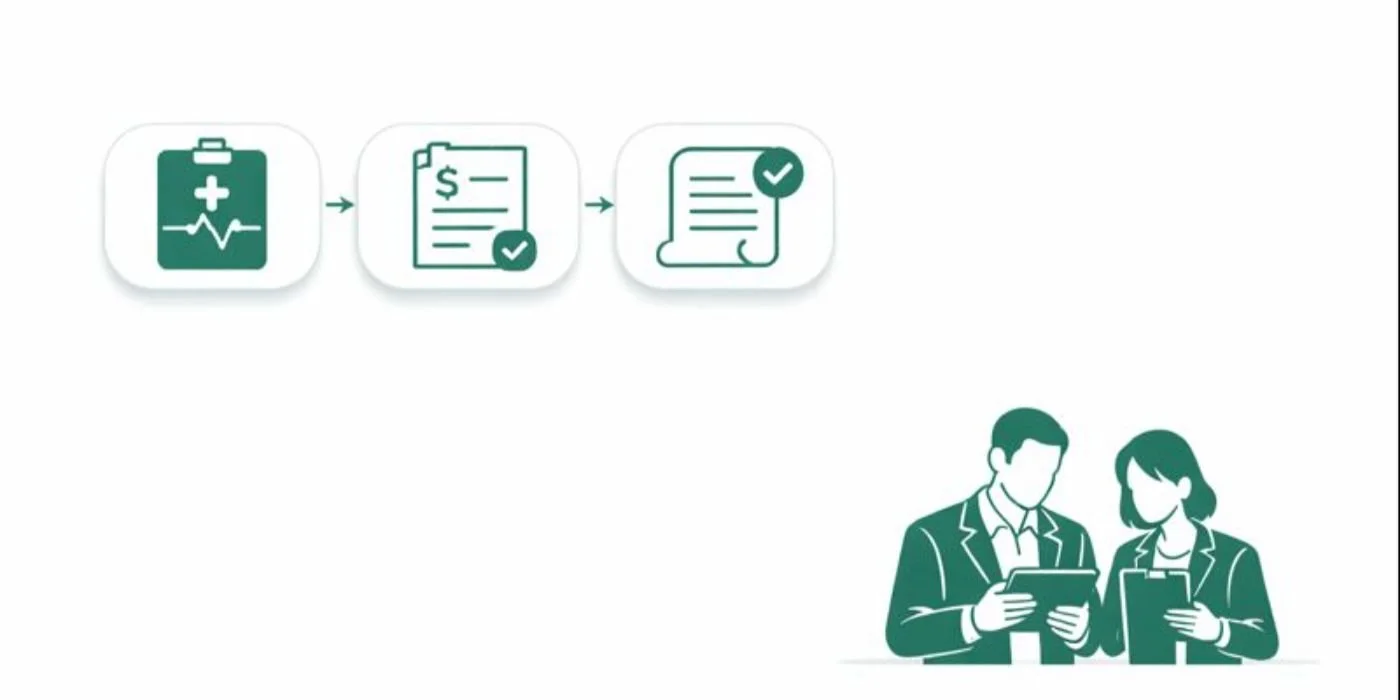
Charge capture is the end to end process of identifying billable services, converting them into charge lines, linking them to correct patient and encounter data, and pushing them into claims with complete support. It is not just “posting charges.” It is an operational chain, and any weak link creates leakage.
Most leakage starts in four places:
Work performed but not documented in a billable way. This is where Clinical Documentation Improvement (CDI) becomes charge capture insurance, not “nice to have.” If the note does not prove medical necessity, payers can deny even a perfectly coded claim using criteria explained in Medical Necessity.
Work documented but not routed into the billing system. This includes missed procedure logs, missing supply capture, time based services not flagged, and charge entry delays. If you do not know your AR velocity and backlog, you cannot spot this. Use the vocabulary and tracking logic in Accounts Receivable (AR).
Work routed but mismatched to the encounter. A wrong date, wrong location, wrong provider identifiers, or wrong payer on file can kill charges before they even become claims. The fastest way to tighten this is to standardize your intake and EDI checks using Electronic Claims Processing terms and your Claims Submission terminology.
Work captured but not defensible under payer policy. This is where denials happen later and feel random. They are not random. Payers usually leave clues inside the remittance and EOB layer. If your team is not reading those consistently, your denial prevention is blind. Start with EOB fundamentals and tie patterns back to charge capture rules.
Charge capture also has a compliance edge. Sloppy capture can look like upcoding, unbundling, or improper billing even when the intent is harmless. If your organization is under pressure from audits, you need strong internal controls, audit trails, and proof standards. Build those using Medical coding audit trails and Quality assurance in medical coding.
When charge capture is tight, you see fewer “mystery denials,” faster cash, fewer rebills, and cleaner metrics. When it is loose, the work multiplies, AR ages out, and your team gets stuck chasing pennies instead of preventing dollars from leaking.
2) The Charge Capture Workflow: From Documentation to a Clean Claim
A charge capture workflow that wins has four control points: documentation, capture, validation, and submission. The point is to prevent defects early, not chase them in AR.
Control Point 1: Documentation that supports billing.
Your note must prove medical necessity, service details, and any time or complexity requirements. This is where teams fall apart because they assume “the coder will figure it out.” Coders cannot invent missing facts. Build standards using CDI terminology and align them to payer expectations using Medical Necessity criteria. If you do not tighten this, your denials will follow you forever.
Control Point 2: Capture at the point of service.
Charge capture works best when it happens close to the clinical action. The longer the delay, the more memory fades, supply usage is missed, and charge entry turns into guesswork. That creates late charges, rebills, and denial exposure. Track the impact using your AR framework and make charge lag a KPI, not a vague complaint.
Control Point 3: Validation before billing.
Validation is where you prevent rejections and denials. It includes patient demographics, provider identifiers, payer eligibility, diagnosis support, and code logic. When teams skip validation, the payer becomes the validator, and the payer is not kind. Standardize your edit process using Electronic claims processing terms and unify the language with Claims submission terminology.
Control Point 4: Submission and remittance feedback loop.
Once claims are submitted, you must learn from the remittance layer, not just fight it. Every denial, reduction, or request is feedback on where your capture failed. That is why teams that understand the EOB process improve faster than teams that only focus on coding rules. Remits show payer behavior, and payer behavior shows what your workflow must prevent.
The key is to build a feedback loop: denial reason → capture stage → root cause → workflow fix. Without that loop, you stay in “work harder” mode instead of “leak less” mode.
3) High-Risk Charge Capture Environments (Where Terms Become Real Money)
Charge capture terms matter most in departments where services are complex, frequent, or time based. These are the places where small capture mistakes become big revenue loss.
Emergency medicine and urgent care run at speed. Missed procedures, missing documentation details, or incorrect linkages happen because the environment is chaotic. If you support ED billing, build a checklist mindset using references like CPT codes for Emergency Medicine and keep your documentation aligned to CDI expectations using CDI terms.
Radiology charge capture breaks when orders, results, and interpreting provider details do not line up cleanly. The capture terms here are mapping, units, and validation. Use Radiology CPT reference and reinforce audit readiness with audit trails.
Cardiology and GI often involve bundles, multiple procedures, supplies, and modifier logic. A missed modifier or poor documentation can flip a paid claim into a denial or underpayment. Tighten your playbook with Cardiology CPT coding and Gastroenterology procedures coding, then back it with QA standards from coding quality assurance.
Infusion and injection therapy is a classic leakage zone because time drives billing and documentation errors are common. If time is missing or inconsistent, payers deny. Anchor your capture work to Infusion and injection therapy billing terms and reinforce medical necessity documentation using the medical necessity guide.
Dialysis and ambulance transport create leakage through frequency policies, coverage conditions, and documentation requirements. These services are often audited, and missing proof is expensive. Use Dialysis coding terms and Ambulance and emergency transport coding to standardize capture and documentation expectations.
If you want a charge capture system that survives payer scrutiny, you must treat high-risk departments as specialized capture environments. One generic workflow does not work for all.
4) Charge Capture Controls That Actually Prevent Denials (Not Just “Work Them”)
Denials are often charge capture defects that arrive late. If you want fewer denials, design controls that stop defects before the payer sees them.
Control 1: A daily charge reconciliation habit.
Reconcile performed services to captured charges using source lists: schedules, procedure logs, infusion logs, imaging worklists, and supply usage reports. This is where missed charges surface fast, while you still have time to fix them without rebills. Track results using AR metrics defined in AR terminology.
Control 2: Hard-stop documentation prompts for high-risk billing.
If your highest denial drivers involve missing time, missing signatures, missing orders, or vague necessity statements, solve it at the documentation level. That is CDI work. Use CDI terms plus clinical documentation integrity concepts to define what “complete” looks like for each service type.
Control 3: Payer-facing validation before submission.
Do not treat claim edits as optional. If an edit fires and the claim goes out anyway, you have designed your system to lose money. Tighten submission logic using Electronic claims processing and reinforce consistent language using claims submission terminology.
Control 4: Remittance feedback loop as a prevention engine.
Remits tell you where payers are pushing back. If you ignore that feedback, you will keep capturing charges in ways payers refuse to pay. Use the EOB guide to standardize how your team reads payer messaging, then feed those patterns into workflow changes and training.
Control 5: Audit-proof workflows.
If your organization is audited, you must be able to show what happened, why it was billed, and how it was supported. That is the difference between a corrected claim and a compliance issue. Build proof habits using medical coding audit trails and make QA routine using coding quality assurance.
A hard truth: if you are constantly “fixing denials,” you are paying staff to compensate for upstream capture failure. Prevention is cheaper, faster, and easier to scale, especially in remote teams.

5) How to Measure Charge Capture Like a Pro (KPIs, Benchmarks, and Proof of Value)
Charge capture work becomes career defining when you can measure it. Most teams talk about “denials” and “backlogs” without quantifying capture performance. That is why leadership does not see the true leakage cost.
Track these metrics:
Charge lag by department and provider. Long lag increases rework and timely filing risk.
Missed charge rate from reconciliation audits. This is your “silent loss” score.
Late charge volume and rebill rate. Too many late charges often signal broken upstream capture.
First-pass clean claim rate tied to capture quality and edit resolution.
Denial rate by root cause mapped back to capture stage (documentation, capture, validation, submission).
You can strengthen KPI framing with AMBCI’s performance context from Revenue cycle efficiency metrics and compare operational health against coding productivity benchmarks.
Use denial data responsibly. Denial counts alone are not insight. You need patterns: which departments, which services, which payer rules, which documentation gaps. If you want to speak with credibility, ground your narrative in quality signals and industry issues reflected in coding error rates and payer pressure reflected in billing compliance violations and penalties.
Charge capture is also impacted by industry changes like telemedicine expansion and reimbursement shifts. If your environment includes virtual care, you need capture rules aligned to payer realities. Use telemedicine reimbursement trends to avoid capture mistakes that look minor but cost real dollars.
When you report charge capture wins, avoid vague claims like “improved billing.” Report measurable outcomes: reduced charge lag, lowered missed charges, increased clean claim rate, reduced denial rates tied to documentation gaps, and improved AR days.
6) FAQs: Charge Capture Terms People Confuse (And the Fast Practical Answer)
-
Charge capture is identifying and recording billable services. Coding is selecting the correct codes based on documentation and rules. You can have correct coding and still lose money if charges were missed, entered late, or linked to the wrong encounter. Charge capture is the upstream system that makes coding possible. Tightening documentation using CDI terms and necessity support using medical necessity criteria improves both.
-
Charge lag is the time between service and charge entry. It is dangerous because delays increase errors, increase late charge volume, and push claims toward timely filing limits. Long charge lag also creates AR backlog pressure because claims are not even built yet. Track it like a KPI and tie it to workflow accountability using AR logic from AR terminology.
-
You find missed charges through reconciliation against source records: schedules, procedure logs, infusion logs, imaging lists, and supply usage. When you reconcile daily or weekly, you spot patterns and fix upstream issues, not just one-off accounts. Document the process for compliance readiness using audit trails.
-
Revenue integrity means the billed charges accurately reflect what was performed and documented, and that they are compliant with payer rules. It protects both reimbursement and audit exposure. If your team is siloed, revenue integrity collapses. Build cross-team standards using quality assurance and documentation integrity concepts from clinical documentation integrity.
-
They show up as denials, reductions, or payer requests for more information. If you only look at denial codes and do not read EOB context, you miss the payer’s feedback about what to fix upstream. Standardize remit reading using the EOB guide and route trends into workflow fixes.
-
Missing time for time-based services, missing supplies, missing modifiers, wrong encounter linkage, and documentation that does not support medical necessity. Specialty environments like ED, imaging, infusion, GI, cardiology, dialysis, and transport are high risk. Use specialty references like Emergency medicine CPT coding, Radiology coding, and Infusion therapy billing terms to lock down capture standards.
-
Use numbers. Show that you reduced charge lag, decreased missed charge rates from reconciliation audits, improved clean claim rates, lowered denial rates tied to documentation issues, or reduced AR days. Tie your story to recognized operational frameworks like revenue cycle efficiency and demonstrate you understand quality controls like audit trails and coding QA.
