
CPC-A Apprentice Status: Reddit Experiences on Removing the ‘A,’ Getting Experience & Landing the First Coding Role
Seeing the “A” after CPC can feel like a career catch-22: employers want experience, while the credential itself announces that you are still building it. The way forward becomes much clearer once you separate three goals that beginners often blur together: removing the apprentice designation, developing real coding competence, and becoming attractive to employers. A coder can strengthen CPC fundamentals, improve medical terminology, master CPT principles, and understand claims workflows while deliberately solving all three.
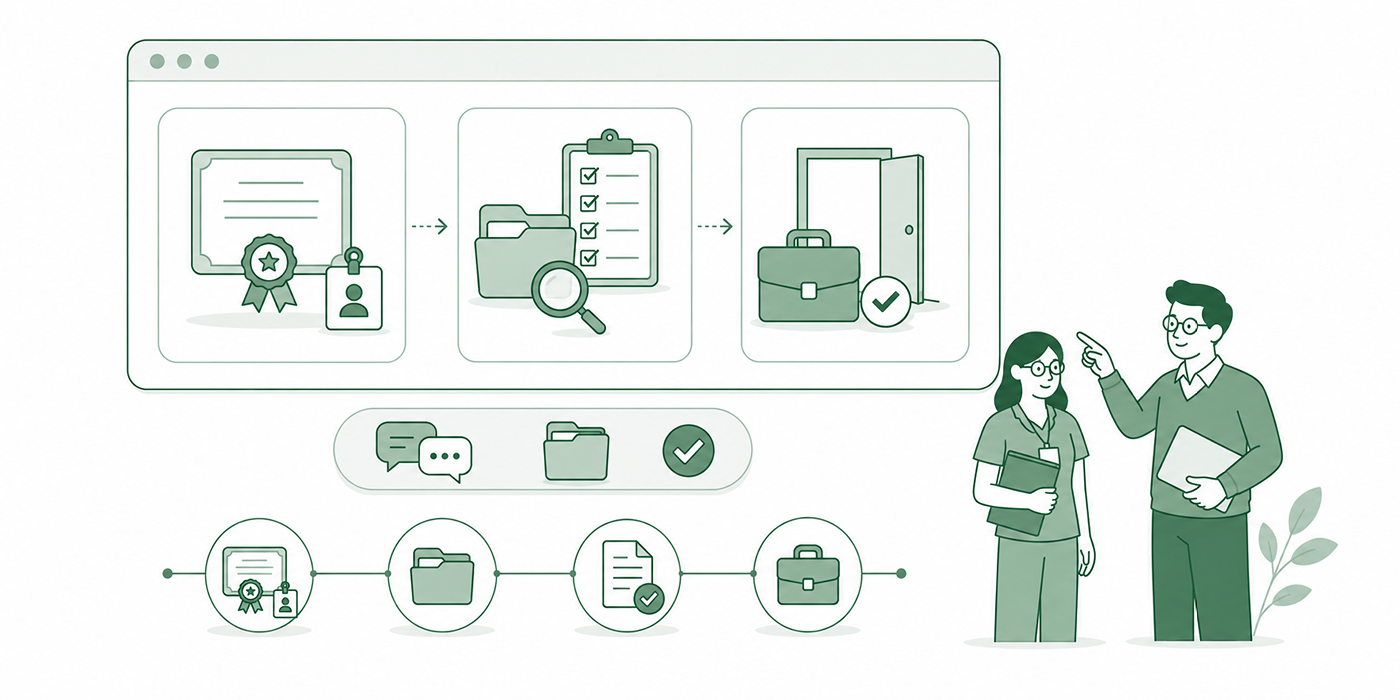
1. What CPC-A Apprentice Status Actually Means in 2026
The CPC-A is the Certified Professional Coder–Apprentice designation issued by AAPC to CPC candidates who have passed the certification exam but have not yet satisfied AAPC's applied-experience requirements for full CPC status. Passing proves that you met the examination standard. The apprentice designation indicates where you stand within AAPC's experience framework. That distinction matters because employers may evaluate CPC exam competence, CPT application, medical terminology, and billing knowledge separately from the letters following your name.
AAPC currently provides three formal pathways for removing the “A.” The first uses two years of verified on-the-job coding experience. The second combines one year of verified coding experience with either an approved 80-hour coding course or completed Practicode. The third combines an approved 80-hour coding course with completed Practicode, allowing a qualifying candidate to satisfy the apprentice-removal requirement without waiting for two full years of employment. This makes prior CPC education, structured coding practice, ongoing CEUs, and practical claims knowledge useful parts of a deliberate removal strategy.
The Practicode component is substantial. AAPC currently requires completion of 600 cases with an overall score of at least 70% for the qualifying CPC-A practicum pathway. AAPC says successful completion can count as one year toward apprentice removal and can generate an internship or externship-style recommendation letter for the employment search. Practicode therefore sits between CPC exam preparation, real-world CPT coding, claims submission knowledge, and eventual production work.
Here is the critical distinction many beginners miss:
Removing the “A” and gaining employer-verified production experience are related career milestones, yet they are different assets.
Someone who completes an eligible 80-hour course plus Practicode may qualify to remove the apprentice designation under AAPC's rules. An employer can still ask whether that candidate has worked inside an EHR, coded a daily production queue, received audit feedback, managed provider documentation, interpreted payer rules, handled denials, reviewed CARCs, or seen how coding affects physician reimbursement. Your smartest plan therefore improves the credential and the employment story simultaneously.
CPC-A Apprentice Removal & First-Job Decision Map
| Situation | What It Means | Best Next Move | Career Value Created |
|---|---|---|---|
| Just passed CPC | You hold CPC-A while experience requirements remain | Start applying while keeping CPC skills active | Credential + fresh technical knowledge |
| Two years verified coding experience | Can satisfy AAPC's full experience route | Collect compliant employer verification and maintain CEUs | Full CPC + production history |
| One year coding experience + eligible course | Can satisfy a combined removal route | Verify your coding education qualifies | Education + workplace evidence |
| One year coding experience + Practicode | Another combined removal route | Finish practicum while strengthening case analysis | Production experience + simulated cases |
| Eligible 80-hour course + Practicode | Can satisfy the apprentice requirement without two employment years | Complete both requirements and continue building billing knowledge | Potential full CPC status before lengthy employment history |
| Practicode only | Counts toward one year of the requirement | Pair it with qualifying experience or education and maintain CPT proficiency | Structured chart abstraction experience |
| 600 Practicode cases completed below 70% | Proficiency threshold has not been met | Diagnose errors using medical terminology review | Identifies practical skill gaps |
| 600 cases at 70%+ overall | Meets AAPC's stated Practicode proficiency requirement | Use completion evidence alongside coding strengths | One-year apprentice credit |
| Prior coding experience before certification | AAPC says eligible experience can predate CPC certification | Request formal verification and document relevant coding work | May shorten removal timeline |
| Externship experience | May count if it meets AAPC verification requirements | Secure proper letters and continue claims education | Documented applied experience |
| Billing job with no actual coding | Useful career experience may not automatically count as coding experience | Build direct exposure to billing and coding workflows | Stronger revenue-cycle resume |
| Denials role | Excellent downstream coding exposure | Learn denial root causes | Shows financial impact awareness |
| Claims role | Builds payer and revenue-cycle familiarity | Understand electronic claims submission | Useful pathway toward coding |
| HIM role | Creates documentation and EHR exposure | Connect records work to clinical terminology | Internal mobility potential |
| Charge entry role | Connects services, codes, charges, and claims | Study reimbursement mechanics | Coding-adjacent operational experience |
| Prior authorization role | Builds payer-rule and medical-necessity exposure | Use payer research tools | Stronger payer literacy |
| Remote-only job search | Greatly narrows beginner opportunities | Strengthen independent workflow knowledge | Prepares for later remote roles |
| Open to on-site roles | More training-heavy opportunities may become available | Prioritize structured coding programs and accuracy development | Potential faster experience accumulation |
| Coder Apprentice opening | Role is explicitly built around early-career development | Apply quickly with strong coding evidence | Direct apprentice-to-CPC route |
| Coder I opening | May accept limited experience depending on employer | Compare duties with your CPT capability | Direct coding experience |
| Posting says 1 year preferred | Could be flexible | Apply when the work aligns with your CPC knowledge | Avoids unnecessary self-rejection |
| Posting says 3 years required | Higher independence may be expected | Evaluate specialty complexity and your technical depth | Better targeting discipline |
| Hospital job description looks outdated | Requirements may not perfectly reflect manager flexibility | Network directly and demonstrate payer knowledge | Access to hidden flexibility |
| High CPC exam score | Useful personal achievement | Lead with applied coding ability instead | More employer-relevant proof |
| Low confidence after Practicode | Chart abstraction exposes different skills from multiple-choice testing | Categorize errors and revisit terminology weaknesses | Targeted improvement plan |
| First coding job feels overwhelming | Production workflow is new | Ask for audits, examples, escalation rules, and feedback on errors | Faster transition to independence |
| Employer will verify experience later | Documentation becomes valuable | Keep dates, job scope, and coding duties organized while maintaining CEUs | Cleaner apprentice-removal application |
| Former employer is hard to contact | Verification could become a bottleneck | Request documentation early and preserve evidence of your coding-related duties | Reduces future administrative risk |
| Full CPC achieved | Apprentice designation is removed | Build specialty depth through continuing education | Stronger long-term positioning |
| Full CPC but no paid coding history | Credential barrier is solved while employment evidence remains limited | Target roles producing [claims, coding, and audit experience] | Transforms credential into market experience |
2. The Three CPC-A Removal Routes and the Documentation Mistakes That Can Delay You
Route 1 is two years of verified on-the-job coding experience. AAPC states that the experience can come from current employers, previous employers, externships, or a qualifying combination, and professional coding experience completed before certification can count. The work must involve CPT, ICD-10-CM, or HCPCS Level II. For someone already coding professionally, this route can be simpler than buying additional coursework. Your practical development should continue through CPT coding, medical terminology, claim submission, and payer research while the clock is running.
Route 2 combines one year of qualifying work with either an eligible 80-hour coding course or Practicode. This route is especially important for people who completed formal CPC training before entering employment. AAPC says qualifying education must represent at least 80 contact hours, and documentation from an outside school can include a transcript, qualifying certificate, or instructor verification depending on the circumstances. Keep evidence of your CPC preparation, terminology training, CPT study, and formal course hours before you need them.
Route 3 combines an eligible 80-hour coding course with Practicode. This is the route many CPC-As overlook because they assume only paid employment can remove the “A.” AAPC's current rules explicitly allow this combination. For somebody whose CPC program already satisfies the education requirement, successful Practicode completion can therefore become the remaining apprentice-removal component. Continue building billing knowledge, CARC fluency, denial awareness, and reimbursement understanding because full CPC status alone cannot replace workplace readiness.
Documentation is where avoidable delays happen. AAPC's current experience route requires employer verification describing coding experience and dates, on company letterhead, hand-signed and dated, with current contact information, submitted in a non-editable format. Its online apprentice application asks candidates to select the experience being submitted and upload the applicable documentation. Do this administrative work while supervisors can still remember your duties. Someone who spends two years handling CPT coding, claims, denials, and reimbursement gains little from discovering later that nobody will document what the job actually involved.
3. What Reddit CPC-A Experiences Reveal About Practicode, Experience and the First Job
Reddit's CPC-A discussions reveal a useful gap between exam confidence and real-chart confidence. In August 2026, one newly certified coder reported passing the CPC with an 80% score and doing well on the exam's case-study portion, then finding Practicode dramatically harder once answer choices disappeared. Another June 2026 user described spending more than an hour on some Practicode cases while struggling with abstraction and low scores. That gap is exactly where medical terminology, CPT mastery, CPC practice, and billing context become practical rather than theoretical.
The right response to a difficult practicum is error classification. Separate abstraction problems from terminology mistakes, missing documentation details, CPT-selection problems, sequencing mistakes, modifier errors, and cases where you simply misread the chart. A July 2026 Reddit discussion included the practical suggestion to record what was right, what was wrong, and the explanation for each chart, then review patterns after several dozen cases. That approach mirrors a professional quality-improvement process and can be reinforced through CPT principles, medical terminology review, Medicare resources, and denial analysis.
Reddit also shows how long the first-job hunt can become. One August 2026 poster reported finally landing a first coding specialist role after holding CPC-A status since 2024, nine months of unemployment, and more than 800 applications. Another May 2026 discussion described a newly certified CPC-A considering a medical-reception or hospital-office role specifically to gain internal access to coding opportunities later. These stories make billing roles, HIM exposure, claims work, and denial management strategically useful rather than consolation prizes.
Current job-market evidence shows that apprentice-friendly openings genuinely exist, although their requirements vary sharply. An August 2026 AAPC job-board listing advertises a structured CPC-A coding-training role designed to provide hands-on experience toward removing the apprentice designation. Another current CPC-A listing accepts the apprentice credential while still requesting substantial related experience and requiring CPC status within two years. That contrast explains why candidates should search beyond “CPC-A jobs” and compare the actual CPT workload, claims responsibilities, payer knowledge, and billing duties behind each title.
One of the most useful August 2026 Reddit posts came from someone working inside a hospital who said their organization continued advertising outdated requirements, requested more experience than managers actually accepted, and failed to mention that coding staff were remote. The poster had originally entered coding by contacting the coding director directly. That is a strong reason to combine job-board applications with targeted networking, direct hospital career pages, local chapters, and outreach to coding leadership while keeping CPC knowledge, claims expertise, reimbursement knowledge, and CEUs visible on your resume.
Quick Poll: What Is Keeping the “A” on Your CPC Right Now?
4. Build an Apprentice-Removal Plan Around Your Actual Situation
If you already completed an eligible coding course, verify that fact first. AAPC says its qualifying CPC preparation course can satisfy the 80-hour education component, while outside education requires appropriate documentation. Once confirmed, you can evaluate whether Practicode gives you the fastest formal path. Spend your study time on CPC case analysis, CPT skills, medical terminology, and claims knowledge instead of buying overlapping education without first identifying the requirement you still lack.
If you are already working in a qualifying coding role, protect the evidence. Record your employment dates, coding systems used, specialties handled, supervisor information, and the nature of your coding duties. Ask early how employment verification will be handled when you become eligible. AAPC restricts formal work verification to employers, supervisors, or HR for this pathway. While accumulating time, deepen your CPT knowledge, payer understanding, denial knowledge, and reimbursement skills so the same year that removes your “A” also increases your market value.
If you have zero coding experience and no qualifying education, solve both gaps deliberately. Start by identifying whether a reputable CPC training program fits your formal requirement. Simultaneously apply to coding-apprentice, Coder I, billing, HIM, charge-entry, denials, claims, authorization, and revenue-cycle roles. Each job teaches a different piece of the system through billing processes, electronic claims, adjustment codes, and payer policies.
If Practicode is destroying your confidence, treat the difficulty as diagnostic data. Reddit discussions in 2026 repeatedly show candidates who performed well enough to pass the CPC and then struggled with open-ended chart abstraction. Build an error ledger with columns for encounter type, missing code, unnecessary code, documentation clue missed, modifier error, terminology problem, research source, and corrected reasoning. Use medical terminology, CPT practice, coding questions, and Medicare resources to correct recurring patterns rather than repeatedly reviewing everything.
If you cannot work on-site, your strategy needs even stronger evidence because beginner remote coding is competitive. Build Practicode or equivalent qualifying experience where appropriate, keep CEUs current, practice CPT coding, learn electronic claims workflows, and search directly on hospital and payer career sites. Current CPC-A listings prove remote apprentice-credential opportunities exist, though some still require related experience.

5. How to Land the First Coding Role and Make the Experience Count
Search by work function rather than one job title. Include CPC-A, coder apprentice, Coder I, junior medical coder, coding specialist, professional-fee coder, charge-entry specialist, claims specialist, medical billing specialist, HIM technician, denials specialist, revenue-cycle representative, prior-authorization specialist, and medical-records roles. The closer a position moves you toward CPT coding, claims processing, payer rules, and denial analysis, the stronger its future relevance.
Build your resume around applied proof. CPC-A belongs near the top, followed by ICD-10-CM, CPT, HCPCS Level II, anatomy, terminology, specialty knowledge, and legitimate practice exposure. Practicode completers can use AAPC's stated internship/externship-style experience and completion documentation accurately rather than presenting it as paid employment. Reinforce it with CPC case practice, medical terminology knowledge, CPT proficiency, and billing knowledge.
Use direct networking strategically. The August 2026 Reddit hospital discussion is particularly valuable because it describes job descriptions containing outdated requirements and a manager willing to interview a new coder who reached out directly. Follow hospital coding departments, attend AAPC chapter events, connect with coding managers, and ask informed questions about apprentice hiring, training, and internal mobility. Having familiarity with physician reimbursement, claims platforms, CARCs, and denial workflows gives you better questions than simply asking whether anybody is hiring.
Evaluate the training system before accepting a first coding job. Two separate Reddit posts in spring 2026 described newly hired CPC-As feeling overwhelmed because production workflow looked very different from exam preparation, with one worker concerned about inadequate training and another receiving little feedback after being placed into live coding. During interviews, ask who trains new coders, how long supervised ramp-up lasts, when productivity targets begin, how often audits occur, how feedback is delivered, and what happens when documentation is unclear. Connect those questions to coding accuracy, payer research, denial prevention, and claim quality.
Once hired, track experience that will matter after the “A” disappears. Record specialties, code sets, EHR or encoder exposure, audit accuracy, productivity milestones, payer environments, denial categories, provider-query experience, and training completed. Never keep patient-identifiable information in personal records. The goal is a professional accomplishment log that converts first-job exposure into evidence for your next role. Maintain coding CEUs, deepen CPT expertise, understand reimbursement, and learn from claim denials. The valuable outcome is becoming the coder who can explain what they have actually done, how accurately they did it, and what kinds of problems they can now solve.
6. FAQs About CPC-A Apprentice Status and Removing the “A”
-
AAPC currently allows three pathways: two years of qualifying coding experience, one year of qualifying coding experience plus an eligible 80-hour coding course or Practicode, or an eligible 80-hour coding course combined with Practicode. Check your CPC education, keep CPT knowledge current, document coding experience, and maintain required CEUs.
-
Practicode can satisfy one year of the apprentice experience requirement. AAPC currently requires completion of 600 cases with an overall score of at least 70%. When combined with qualifying education under AAPC's third pathway, it can contribute to full removal of the “A.” Use it alongside medical terminology, CPT practice, claims knowledge, and payer research.
-
AAPC's current 80-hour course + Practicode pathway makes that possible when both components satisfy its requirements. Full CPC status will strengthen the credential line on your resume, while employers may still distinguish practicum experience from paid production coding. Continue developing billing knowledge, claims experience, denial knowledge, and reimbursement understanding.
-
AAPC states that qualifying professional coding experience completed before or after certification can count toward apprentice removal. The work still needs appropriate verification. Gather documentation covering the dates, coding duties, and qualifying code sets while continuing to strengthen CPT coding, medical terminology, claims knowledge, and CEUs.
-
AAPC's employment pathway specifically requires verified on-the-job experience using qualifying coding code sets, so a billing title alone does not establish eligibility. Determine what coding work you actually perform and whether your employer can verify it. Billing experience can still strengthen your career through claims submission, CARC interpretation, denial management, and reimbursement knowledge.
-
Yes. AAPC's current job board contains CPC-A-specific opportunities, including an August 2026 apprentice position explicitly designed to give entry-level coders real-world experience toward apprentice removal. Requirements vary considerably, so strengthen applications with CPC practice, CPT knowledge, billing fundamentals, and payer knowledge.
