
CPT Coding Essentials for Dermatology Procedures
Dermatology is one of the easiest specialties to code “almost right” and still lose serious revenue. Why? Because payers don’t deny derm claims for “wrong CPT” as often as they deny for missing clinical logic: lesion intent vs technique, size methodology, anatomic specificity, bundling rules, repair hierarchy, pathology linkage, and documentation that proves medical necessity — not just that “a thing was removed.”
This guide is built to keep you out of the denial spiral: fewer takebacks, cleaner edits, better first-pass yield, and fewer back-and-forths with providers. We’ll treat dermatology CPT like a system: procedure families, documentation triggers, modifier rules, and the billing guardrails that protect collections.
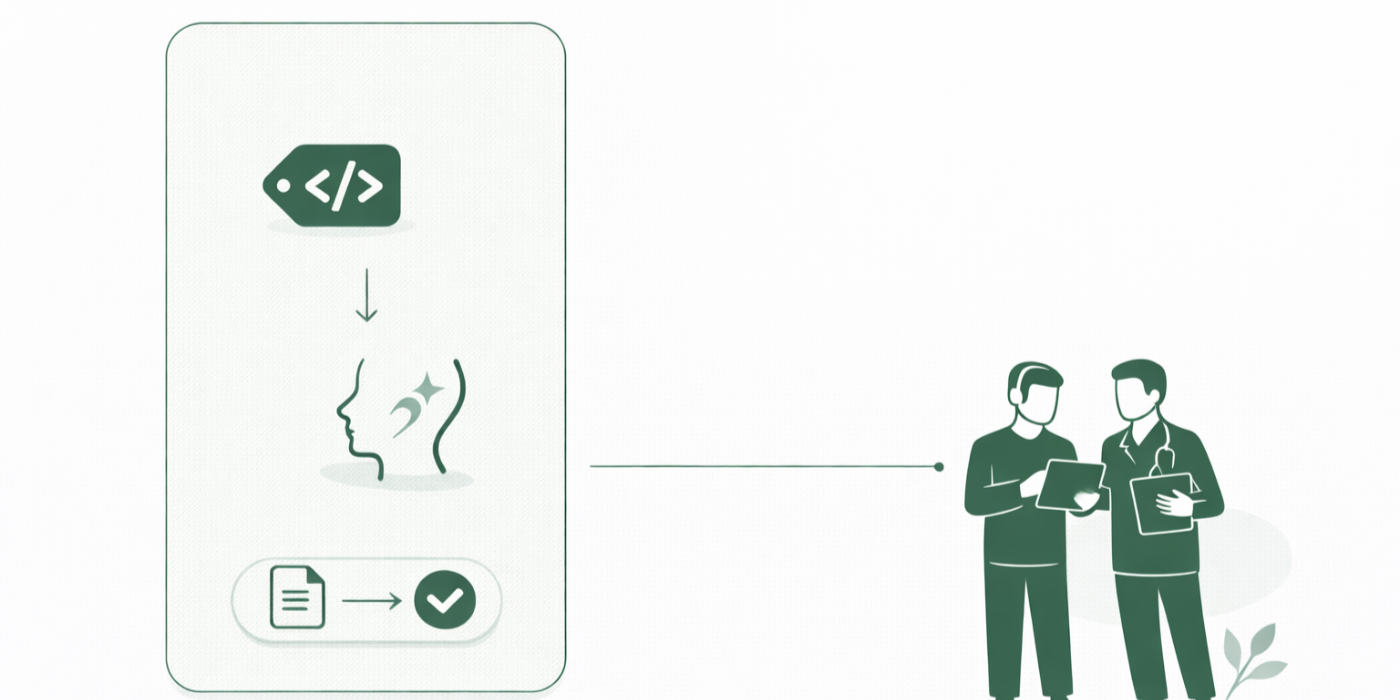
1) Dermatology CPT “Essentials” = Document the Clinical Logic, Not Just the Procedure
If your dermatology claims are getting clipped, it’s rarely because the coder can’t find a code. It’s because the chart doesn’t prove the code. In derm, the “proof” is usually a combination of: intent, technique, size methodology, anatomic location, and what was done in addition (repair, pathology, imaging, supplies, anesthesia, etc.).
Start by separating two concepts coders often blur:
What the provider intended (diagnostic vs therapeutic, benign vs malignant suspicion, symptomatic vs cosmetic)
What technique was performed (shave vs punch vs excision vs destruction vs Mohs)
Those aren’t interchangeable. A “biopsy” is not “excision,” even if the lesion is fully removed incidentally. A destruction is not an excision, even if the lesion “falls off.” Payers read these as different clinical stories, and if the story is incomplete, they default to denial or downcode — then your EOB becomes a treasure hunt for what went wrong.
The 8 derm documentation anchors that protect reimbursement
Use these anchors as a mental checklist; if one is missing, you’re coding blind:
Diagnosis specificity (symptomatic vs screening vs cosmetic; rule-out language matters) → tie this to medical necessity early.
Exact anatomic site (not “arm,” but “right dorsal forearm,” not “face,” but “left nasal ala”).
Lesion count (especially for destruction and multiple biopsies).
Size methodology (critical for excisions and repairs; document how measured).
Technique (shave vs punch vs tangential vs incisional vs excisional; device used can hint but should not replace the technique statement).
Margins (when relevant; absence triggers denials for malignant excisions).
Closure method (simple vs intermediate vs complex; layered closure specifics).
Pathology linkage (specimen sent? pathology report referenced? separate billing expectations vary).
When these anchors are built into provider templates, claim accuracy rises — and you spend less time fighting CARCs / RARCs after the fact.
“Derm revenue leakage” almost always follows the same pattern
A payer edits the line item, the claim pays partially, and the team treats it like a one-off. But the pattern repeats weekly because the root cause is workflow: inconsistent charge capture, missing sizes, unclear technique, or sloppy modifier logic. If you don’t track it, you can’t stop it — that’s why tying derm denials into RCM KPIs is non-negotiable.
Before we get into procedure families, use the map below to align your team on “what a term means” and “what you must do” in real billing terms.
2) Core Dermatology Procedure Families and the Coding Decisions That Make or Break the Claim
Dermatology CPT success comes from knowing which “family” a service belongs to, and what that family demands from documentation. Think in families, not codes.
A) Biopsies: accuracy is technique + lesion count + site logic
Biopsy services are one of the biggest derm denial engines because documentation often says only “biopsy done,” which forces coders to infer technique. In payer-land, inference = denial.
What you must have in the note:
Technique: shave/tangential vs punch vs incisional/excisional sample
Site: specific and laterality when applicable
Lesion count: multiple biopsies must be unambiguous
Pathology plan: “sent to pathology” and labeling
Then make sure the downstream billing story matches the upstream documentation — because your denial team will be reading the remittance advice remark codes when payers say “documentation does not support.”
B) Excision: size methodology is the billing heartbeat
Excision claims live or die on measurements. Many denials are not “wrong CPT,” they’re “insufficient documentation to support size-based selection.” If the provider records “1 cm lesion removed,” but doesn’t document margins or excised diameter methodology, you’ve handed the payer an excuse to downcode.
Hard rule for derm excisions:
Capture lesion size and margins (when relevant) and the final excised diameter
Capture location group clearly (face vs trunk vs extremities) because site groupings often change coding logic
Don’t forget closure documentation if separately reportable; don’t assume it’s included without checking bundling guidance and coding edits/modifiers logic
C) Destruction: “count” is the currency
Cryotherapy, laser, electrosurgery — destruction work is frequently denied because the record doesn’t show lesion count, lesion type, or medical necessity for each treated group.
The payer questions are predictable:
Was it symptomatic or cosmetic?
How many lesions?
What exact lesion type (e.g., AKs vs benign growths vs warts)?
What method?
This is where you protect claims with upfront medical necessity logic and know how to defend it when CARCs hit.
D) Repairs, flaps, and grafts: closure is not “a footnote”
Derm providers often view closure as the end of the procedure. Payers view closure as a separate billing decision with rules.
Two common revenue mistakes:
Undercoding repairs because layered closure isn’t documented (so it defaults to simple).
Overcoding repairs when the note doesn’t support complexity (audit risk).
Your protection strategy:
Require explicit closure type and details (layers, materials, undermining, debridement if applicable)
Ensure anatomic site and length are recorded clearly and measured correctly
Tie repair billing into broader compliance controls (see medical coding regulatory compliance and medical coding audit terms)
E) Pathology linkage: coding is only as defendable as the paper trail
Derm is pathology-heavy. Even when pathology is billed separately, your claim defense often depends on connecting:
Why it was removed (diagnosis, suspicion, symptoms)
What was removed (site, size, technique)
What happened to the specimen (sent, labeled, results referenced)
When those links break, denials become “documentation missing” and you end up chasing EOB explanations line by line instead of fixing root causes.
3) Modifiers, Bundling, and “Derm-Specific Denial Triggers” You Must Control
Derm is a modifier minefield because providers often do multiple clinically valid services in one encounter — but payers only reimburse cleanly if you separate the stories.
Modifier -25: the fastest way to get paid… and the fastest way to get denied
Payers deny -25 when the E/M looks like it exists only to justify the procedure. The fix is not “don’t bill E/M.” The fix is documentation architecture.
Best practice:
Put the problem-oriented assessment (history, decision-making, differential, plan) in the E/M section
Put the procedure details in the procedure note
Make the “why now” clear: change in lesion, symptoms, failed conservative care, risk factors
If you need stronger language and compliance framing, align provider training with your internal clinical documentation improvement terms so the note reliably supports what you bill.
Modifier -59 and X{EPSU}: only when “distinct” is provable
In derm, “distinct” is usually one of these:
Different anatomic site
Different lesion
Different session/time
Different procedure type not normally performed together
If your only evidence is “performed both,” expect payer pushback. Build distinctness into templates:
Separate site fields
Separate lesion descriptors
Separate procedure sections when needed
And always sanity-check against your organization’s edits guidance (use coding edits & modifiers as a consistent internal reference point).
Bundling logic: where money disappears quietly
Some bundling problems don’t create denials. They create silent underpayments. That’s worse, because teams don’t fight what they don’t notice.
To stop silent leakage:
Track underpayments as part of revenue leakage prevention
Monitor payer behavior and escalate consistent patterns using RCM software / practice systems knowledge and your internal analytics
Coordination of benefits (COB): derm is not immune
Derm offices see secondary insurance complexities (especially for follow-up procedures, pathology billing separation, and hospital-based outpatient encounters). If COB is wrong, payment delays look like “coding problems” but are actually eligibility/priority issues.
Keep COB clean with a shared playbook tied to coordination of benefits definitions and denial workflows.
4) Medical Necessity in Dermatology: The Exact “Proof” Payers Want (and What They Reject)
Dermatology claims get punished when documentation reads like cosmetic care. Your job is to ensure the note answers the payer’s unspoken question:
“Why was this necessary today?”
That “why” typically comes from:
Symptoms (bleeding, pain, pruritus, recurrent irritation)
Change (growth, color change, border change, ulceration)
Risk (history of skin cancer, immunosuppression)
Failure of conservative management (when relevant)
Suspicion of malignancy (with appropriate language)
Anchor your team’s documentation around medical necessity criteria so you’re not retrofitting necessity after denial. Use this as a consistent internal reference: medical necessity criteria essentials.
Medicare realities: don’t guess — build Medicare thinking into the workflow
Medicare denials are often less forgiving because coverage logic is explicit. Your coders should be able to translate a denial into an action plan using Medicare language and documentation expectations.
If your team struggles here, build training around:
System-level policy shifts that influence payment models (even when you’re not directly coding “value-based care” for derm, payers adopt similar enforcement behaviors): value-based care coding terms
Cosmetic vs covered: stop losing the argument in the chart
Payers don’t deny “because they’re mean.” They deny because the note makes it easy.
High-risk phrasing that causes denials:
“Patient desires removal”
“For appearance”
“Cosmetic concern”
Covered phrasing that supports necessity (when true):
“Irritated by clothing,” “bleeds with shaving,” “recurrent trauma”
“Changing in size/color,” “ulcerated,” “non-healing”
“Suspicious features,” “rule out malignancy”
Then ensure the billing team can read outcomes in the remittance without panic by using EOB interpretation and CARC/RARC dictionaries to convert denials into process fixes, not blame games.

5) A Pro-Level Dermatology Coding Workflow: Prevent Denials, Stop Leakage, and Scale Accuracy
High-value derm coding isn’t “coding faster.” It’s building a workflow where the same few mistakes can’t survive.
Step 1: Build a derm charge capture reconciliation loop
Most derm revenue leakage is operational: missed multiple-lesion counts, missed repair add-ons, missed pathology linkage, or missed separate E/M when truly warranted.
Fix it with a daily loop:
Procedure log (clinical) vs charges posted (billing)
Specimen log vs pathology billing workflow
Same-day E/M + procedure cases flagged for -25 compliance review
If you need systems-level language to align leadership, frame this as charge capture and revenue leakage prevention, not “coder mistakes.”
Step 2: Standardize templates around the 8 anchors
Derm templates should not be free-text roulette. Create structured fields:
Site (with laterality)
Lesion count
Lesion measurement + margin measurement method
Technique selection (dropdown)
Closure selection (simple/intermediate/complex with auto-prompts for supporting details)
Pathology checkbox + specimen label prompts
This is where clinical documentation integrity becomes a billing asset (see CDI terminology).
Step 3: Use denial codes as training data
Every denial is a training dataset. If you’re not trending denials by reason, you’re paying tuition forever.
Build monthly reports:
Top 10 CARC/RARC combos (use RARCs dictionary)
Top denial procedure families (biopsy, excision, destruction, repair)
Provider-level documentation failure types (missing size, missing count, unclear technique)
Payer-level behavior differences
Then connect it to RCM KPIs so leadership funds fixes.
Step 4: Train coders to “think like an auditor”
Derm is audit-prone because the services are common and the documentation variance is huge. Prepare your coders to defend decisions using:
Defined audit language: medical coding audit terms dictionary
Compliance framing: coding regulatory compliance
Edits/modifier logic: coding edits & modifiers
This turns your team from “reactive billers” into “reimbursement defenders.”
Step 5: Use a derm-specific study path for skill building
If you’re building staff competency specifically for derm, use a structured learning resource built for the specialty: dermatology coding exam complete study guide. Pair it with foundational dictionaries like medical billing dictionary and medical coding compliance dictionary so new coders learn the language that protects claims.
6) FAQs: CPT Coding Essentials for Dermatology Procedures
-
-
Because documentation frequently misses the payer’s required proof: lesion count, lesion type, and medical necessity for the treated set. If the note reads like cosmetic treatment, the claim gets treated like cosmetic treatment. Tighten your documentation using medical necessity criteria and enforce count/type prompts in templates.
-
Make the E/M note clearly problem-oriented and separate from the procedure note. The E/M must show evaluation and decision-making that stands on its own (new complaint, change in lesion, differential, management plan). If your team struggles with this, train using your edits/modifier framework: understanding coding edits and modifiers.
-
Treat it as a potential silent underpayment and investigate bundling/edit logic. Use the EOB guide to interpret payer messaging, then trend issues under revenue leakage prevention rather than writing them off as “payer randomness.”
-
Audits are won before they happen: consistent templates, a reconciliation loop for charge capture, and a coder mindset trained on defensibility. Build internal readiness around medical coding audit terms and compliance expectations in medical coding regulatory compliance. The goal is not “perfect charts,” it’s charts that prove the billed service.
-
Missed lesion counts, missing size/margin methodology, unclear technique, under-documented closure complexity, and weak pathology linkage. Fixes live in workflow, not heroics: reconcile charges daily, standardize templates, and connect performance to RCM KPIs so leakage becomes visible and correctable.
