
Understanding Encounter Forms & Superbills
Encounter forms and superbills look simple until they start leaking money. One missing modifier, one vague diagnosis handoff, one outdated code set, or one undocumented reason for service can turn a routine visit into a rejection, denial, underpayment, or audit problem. That is why these forms matter far beyond front-desk paperwork.
This guide explains encounter forms and superbills as real operational tools for charge capture, coding accuracy, documentation support, and cleaner claim submission so billing teams can stop treating them like clerical leftovers and start using them as revenue-control instruments. AAFP describes the superbill as a tool that communicates what services were provided and why they were medically necessary, while CMS ties claim payment to accurate codes, claim formats, and documentation that supports coverage, coding, and billing requirements.
1. What Encounter Forms and Superbills Actually Do in Medical Billing
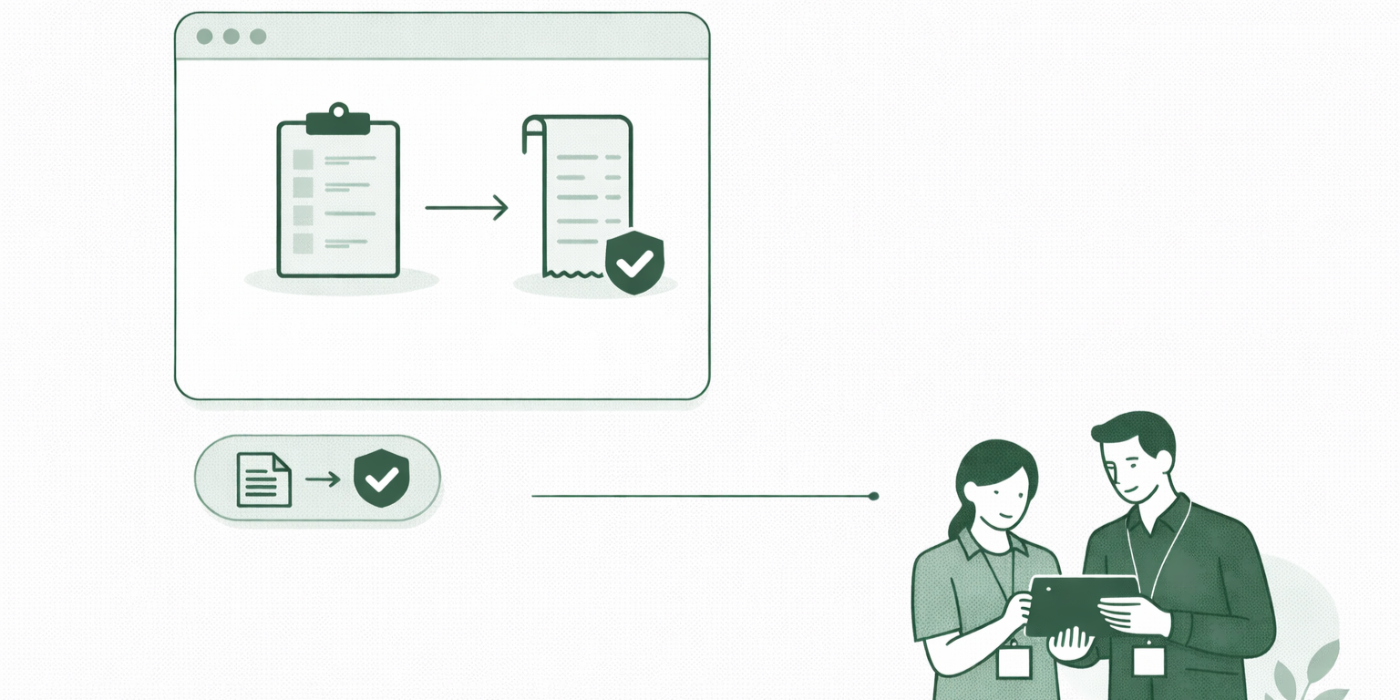
An encounter form is the visit-level handoff that captures what happened during the patient encounter in a format the practice can turn into billable data. A superbill is the more coding-focused version of that handoff, usually built around the diagnoses, procedures, and visit items a practice reports most often. AAPC describes an encounter form, also called a superbill or fee ticket, as a form generated for each patient encounter, while AAFP explains that the purpose of a superbill is to communicate what services were provided and why they were medically necessary. That sounds basic, but operationally it is a high-risk translation point between clinical work and reimbursement.
That translation point matters because the payer never reimburses your intentions. It reimburses the claim that leaves your system, and that claim depends on how well the practice converts visit facts into reportable billing data. If the encounter form fails to capture the correct visit level, procedure detail, diagnosis linkage, or follow-up items, the downstream team starts guessing. Guessing creates wrong charge capture, weak medical claims submission, avoidable coding edits and modifier issues, and silent revenue leakage. CMS states that HIPAA requires standard diagnosis and procedure codes and that Medicare claims are submitted on the electronic 837P or paper CMS-1500, which means the form inside the practice must ultimately feed a standardized claim outside the practice.
A lot of teams confuse encounter forms with mere convenience tools, but that is exactly why they become dangerous. The form is where documentation, coding, medical necessity, and workflow discipline first collide. If providers circle vague items, if staff rely on memory, if old CPT or ICD logic sits on the form for months, or if diagnosis choices do not actually support the service selected, denials are already being manufactured upstream. That is why encounter-form design belongs in the same conversation as medical necessity criteria, clinical documentation integrity, practice management systems, and accurate billing and reimbursement. CMS also makes clear that Medicare only pays when the medical record supports coverage and coding requirements, which means the form is useful only when it accurately reflects and supports the actual record.
Encounter Forms & Superbills Terms Map: What They Mean and Why They Matter (28+ Rows)
| Term | What It Means | Why It Matters | Best Practice Action |
|---|---|---|---|
| Encounter Form | Visit-level form capturing billable services, diagnoses, and workflow details. | It is often the first billing handoff after the encounter. | Treat it as a controlled revenue document, not casual office paperwork. |
| Superbill | Provider-facing billing tool listing common diagnoses, procedures, and visit items. | Speeds charge capture but can hard-code bad habits if outdated. | Customize by specialty and update on a defined schedule. |
| Charge Capture | Turning documented services into billable charges. | Missed items here never become claims. | Audit encounter forms against schedules, notes, and posted charges. |
| Diagnosis Linkage | Matching diagnosis codes to procedures or visits. | Weak linkage drives medical necessity denials. | Require diagnosis-to-service clarity on the form. |
| CPT Selection | Choosing the correct procedure or service code. | Wrong code choice affects payment, edits, and compliance. | Use current coding references and provider education. |
| ICD Selection | Choosing the correct diagnosis code. | Diagnosis supports medical necessity and risk accuracy. | Avoid vague default selections that do not match documentation. |
| Modifier Capture | Identifying required modifiers for distinct or adjusted services. | Missing modifiers cause denials or underpayments. | Add specialty-specific modifier prompts where risk is high. |
| Units | Quantity reported for billable services. | Wrong units distort reimbursement fast. | Force unit entry where time, injections, or supplies matter. |
| E/M Level | Evaluation and management service level selected for the visit. | Major source of revenue risk and audit exposure. | Tie form choices to documented complexity and necessity. |
| Medical Necessity | Proof that the service was clinically justified. | Claims can deny even when the procedure technically occurred. | Make diagnosis and service rationale visible to coding staff. |
| Fee Ticket | Another term for encounter form or superbill. | Terminology differences can hide process inconsistency. | Standardize naming internally to avoid training gaps. |
| Template Drift | Gradual mismatch between form design and current coding reality. | Old forms create systematic errors. | Review usage patterns and denials before each code-cycle update. |
| Default Code Bias | Habit of overusing preprinted codes because they are easy to mark. | Encourages inaccurate or lazy reporting. | Limit defaults to truly common, defensible services. |
| Claim Scrub Trigger | Issue flagged later by edits because the form was incomplete or wrong. | Shows upstream failure, not just billing failure. | Track scrub edits back to specific encounter-form design defects. |
| Provider Signature/Attestation | Confirmation that the reported service reflects what occurred. | Supports accountability and workflow integrity. | Use clear sign-off rules in paper or electronic workflows. |
| Follow-Up Orders | Next-step items such as referrals, labs, or returns documented on the form. | Can affect future charge capture and continuity. | Keep these distinct from billable service fields. |
| Place of Service | Code identifying where the service occurred. | Payment and policy logic often depend on this field. | Build site-of-care prompts into multi-location forms. |
| Rendering Provider Detail | Identifies who performed the service. | Wrong provider attribution can cause claim issues. | Prepopulate accurately in electronic workflows. |
| Authorization Flag | Indicator that prior approval may be required. | Missed authorization can wipe out reimbursement. | Add risk alerts for services likely to need authorization. |
| Supply Capture | Recording billable supplies used during the visit. | Supplies are commonly forgotten and never billed. | Use prompts for high-frequency supply-dependent services. |
| Encounter Lag | Delay between visit date and billing handoff completion. | Increases timely filing and correction risk. | Measure lag by provider and clinic daily. |
| Paper Workflow Risk | Errors introduced by handwriting, loss, scanning, or re-entry. | Creates silent defects before coding even starts. | Convert high-volume paper steps to controlled electronic capture. |
| Electronic Superbill | Digital encounter billing template embedded in EHR or PM software. | Improves legibility and rule-based prompts if well designed. | Map fields cleanly into coding and claim workflows. |
| Denial Root Cause | The true reason payment failed, often originating at the form stage. | Prevents shallow blame on billers alone. | Tag denial types back to encounter-form defects where relevant. |
| Rebill vs Appeal Decision | Choice between correcting the original data or disputing payer action. | Wrong path wastes filing time. | Determine whether the superbill itself was wrong first. |
| Audit Trail | Record showing how visit facts became claim lines. | Critical for compliance review and corrections. | Retain traceable links between note, form, and final claim. |
| Version Control | Tracking which form template is active and current. | Prevents old forms from surviving after code changes. | Retire obsolete templates aggressively. |
| Code Refresh Cycle | Planned update schedule for CPT, ICD, HCPCS, and edits. | Outdated forms create predictable claim defects. | Tie form updates to annual and quarterly code maintenance. |
| Revenue Integrity Check | Review ensuring the form supports complete, compliant billing. | Balances payment capture against audit risk. | Review top services, denials, and missed charges routinely. |
2. The Terms and Fields That Make or Break an Encounter Form
A good encounter form is not the form with the most codes on it. It is the form that captures the right decisions with the least ambiguity. The most important fields are usually the ones teams rush past: patient identity, date of service, rendering provider, place of service, diagnoses, procedures, modifiers, units, and any payer-sensitive visit details. If any one of those is weak, the downstream team starts repairing instead of processing. That is why strong encounter-form design connects directly to medical billing practice management systems, electronic health record integration, encoder software terms, and medical coding workflow terms. CMS’ claim guidance also underscores that diagnosis coding, procedure coding, and modifiers must align with the standard claim process that ultimately reaches Medicare and other payers.
The highest-risk field is often diagnosis linkage because that is where the billing team learns whether the service selected can stand up to payer logic. AAFP has noted that payers do not care only that a CPT and diagnosis code appear on the form; they care that the nature of the service is reflected correctly, and claim denials often occur when the diagnosis submitted does not support medical necessity. If the superbill lets providers mark a common service without clearly connecting it to the diagnosis that justifies it, the form is teaching the organization to create denials. That is why teams need tight alignment between medical necessity guidance, clinical documentation improvement terms, accurate clinical documentation, and coding query process terms.
Modifiers and units are another pain point because many offices treat them like coder clean-up instead of visit-level data. That is backwards. If the encounter form does not prompt for procedure distinctness, laterality, staged care, preventive logic, or quantity-sensitive administration work where relevant, the coder is left reconstructing the visit from incomplete clues. That slows claims and increases the odds of both underbilling and overbilling. Smart teams therefore pair encounter-form design with coding edits and modifiers, infusion and injection billing terms, lab and pathology coding essentials, and radiology billing and coding terms instead of using one generic form for everything.
3. How Encounter Forms and Superbills Affect Documentation, Coding, and Reimbursement
The encounter form is where documentation becomes financially usable. CMS states that Medicare only pays when the medical record documentation indicates that coverage and coding requirements were met, and CMS can request documentation to support payment of the service reported on the claim. That means the superbill is never a substitute for the chart, but it absolutely influences whether the coder and biller can translate the chart correctly and whether the claim lines reflect the medical record cleanly. When that translation fails, the organization gets hurt twice: once in payment delay and once in staff time wasted on repair.
This is why superbills should be seen as charge-capture tools with compliance consequences. They accelerate common outpatient reporting, which is useful, but speed without control is how clinics create systematic revenue problems. AAFP’s superbill discussion emphasizes that the form is built around the majority of services a practice provides, and AAPC notes that superbills are customized for a provider office and typically include common CPT and ICD choices. That customization is powerful, but it is also dangerous. If a template quietly pushes providers toward stale diagnosis shortcuts, overused E/M levels, or missing supply charges, the form becomes a machine for repeating the same mistake at scale. That is why good teams connect superbills with medical coding audits, medical coding audit terms, regulatory compliance, and denials prevention and management.
Reimbursement is also affected by how current the form is. AMA announced new Category I CPT codes effective January 1, 2026, CMS continues to publish ICD-10 updates, and AAPC notes that CPT and ICD-10 codes are updated annually while HCPCS Level II codes and NCCI edits are updated quarterly. In plain operational terms, that means a superbill that “worked fine last year” may quietly become a defect generator this year. If your form is not version-controlled, your denials and underpayments will look random when they are actually template-driven. That is why form maintenance belongs beside revenue cycle management software terms, coding automation terms, medical coding education and accreditation terms, and continuing education units for coders.
Quick Poll: What is your biggest encounter form or superbill pain?
4. The Most Expensive Encounter Form and Superbill Mistakes
The costliest mistake is not always a wrong code. Often it is default-code bias. A preprinted encounter form can make the most common option feel like the correct option, even when the documentation supports something else. That is how a form quietly drives undercoding, overcoding, or diagnosis vagueness. It also creates false confidence because the workflow feels fast. If your team sees repeated payer edits, E/M disputes, medical necessity denials, or frequent coder queries tied to the same clinic or provider, the form itself may be the problem. That is why offices should connect form review to EOB interpretation, claim adjustment reason codes, remark codes, and revenue cycle KPIs.
The next major mistake is using encounter forms as a substitute for real coding review. A superbill can accelerate common reporting, but it should never be a permission slip to ignore documentation nuance. CMS’ current E/M compliance guidance emphasizes billing requirements, documentation standards, and proper coding, and CMS also notes that documentation must illustrate the medical necessity of the visit. In other words, the form can aid code communication, but it cannot create support that the chart does not contain. Practices that use prechecked forms to outrun documentation discipline eventually pay for it through denials, refunds, or audit exposure. That is why encounter-form governance belongs with clinical documentation improvement, SOAP notes and coding, EHR documentation terms, and HIPAA compliance in medical billing.
Paper workflow risk is another underappreciated problem. Handwritten marks, lost forms, scanning errors, duplicate entry, and delayed transcriptions turn simple visits into billing noise. Electronic superbills can reduce that noise, but only if the fields map cleanly into claims logic. A badly designed digital form just reproduces old paper mistakes in a prettier format. That is why strong teams align form conversion with EHR integration terms, practice management systems, medical coding workflow terms, and guide to selecting billing software, not just with scanning convenience.

5. How to Build and Maintain Encounter Forms That Protect Revenue
A strong encounter form starts with one principle: make correct reporting easier than lazy reporting. That means the form should reflect the clinic’s most common legitimate services, diagnoses, modifiers, and supply patterns, but it should not push staff toward vague or outdated shortcuts. AAFP’s superbill model emphasizes customization to the practice’s common services, and that is exactly right, but customization must be governed. The form should be specialty-specific, site-aware, reviewed against denial patterns, and tied to actual provider documentation habits. Otherwise it becomes a static artifact in a dynamic coding environment.
Version control is non-negotiable. AMA and CMS both continue to update code sets, and AAPC notes that annual and quarterly updates affect CPT, ICD, HCPCS, and edits. So the form should have an owner, a refresh calendar, a test process, and a retirement rule for obsolete versions. No clinic should be using “whatever PDF someone saved last year.” Strong organizations connect this refresh work to continuing education for coders, coding credentialing organizations, medical coding education terms, and future skills coders need in the age of AI.
Finally, measure the form like any other revenue tool. Track coder correction rate by clinic, top scrub edits tied to encounter-level omissions, modifier miss frequency, missed supply charges, rebills caused by wrong form data, and denial trends where the root cause started at the handoff. If the form is generating preventable work, it is broken whether or not staff are used to it. The goal is not prettier paperwork. The goal is cleaner charge capture, faster claim submission, fewer denials, stronger payment posting and management, and less revenue leakage.
6. FAQs About Encounter Forms & Superbills
-
In many practices the terms overlap, but an encounter form usually refers to the broader visit-level billing handoff, while a superbill is the coding-focused form listing common diagnoses and procedures used to communicate what happened during the visit. AAPC explicitly notes that encounter forms are also called superbills or fee tickets, while AAFP frames the superbill as a tool for communicating the services provided and why they were medically necessary. In practice, the bigger issue is not the label but whether the form supports clean charge capture, accurate claim submission, medical necessity support, and coding workflow clarity.
-
No. A superbill helps communicate reportable services, but it does not replace the medical record. CMS makes clear that payment depends on documentation supporting coverage, coding, and billing requirements, and CMS may request supporting documentation for services reported on a claim. That is why a superbill must align with clinical documentation integrity, EMR documentation terms, SOAP note and coding practices, and medical record retention terms.
-
Because code sets and payment logic change. AMA announced new CPT 2026 codes effective January 1, 2026, CMS continues to publish ICD-10 updates, and AAPC notes that CPT and ICD-10 update annually while HCPCS and NCCI-related logic can update quarterly. If the form still reflects old choices, the clinic can submit invalid, incomplete, or weakly supported claims. That is why update discipline should tie into coding automation terms, encoder software terms, coding education and accreditation, and CEUs for coders.
-
At minimum, it should support accurate patient identification, date of service, rendering provider, place of service, diagnoses, procedures, modifiers where needed, units where needed, and any specialty-specific prompts that commonly affect payment. The exact build should reflect the clinic’s real services and payer risk points. That is why strong practices connect form design to practice management systems, EHR integration, medical coding workflow terms, and billing software selection.
-
They affect them by controlling how clearly the service is linked to the diagnosis and whether the billing team receives enough structured information to report the visit correctly. AAFP has noted that denials can result when the diagnosis submitted on the claim does not support the service, even when the provider’s documentation may have justified it. That is why encounter forms must reinforce medical necessity criteria, clinical documentation improvement, coding query process terms, and accurate reimbursement practices.
-
They can work, but they create more exposure to handwriting errors, lost pages, delayed handoff, scanning problems, and manual re-entry defects. Electronic superbills usually improve control, but only when they are mapped properly into coding and billing workflows. The real test is not paper versus digital. It is whether the system produces cleaner charge capture, fewer claim edits, better payment posting, and less revenue leakage.
