
Guide to Payment Posting in Medical Billing
Payment posting is one of the most underestimated profit-protection functions in the revenue cycle. Many teams treat it like the final administrative step after claims are paid, but that mindset is exactly why underpayments slip through, patient balances become distorted, credit balances accumulate, and denial trends stay hidden until they start hurting cash flow. Payment posting is not just about recording money received. It is about interpreting payer behavior correctly and protecting every dollar that should have been collected.
When posting is done well, it validates reimbursement accuracy, exposes payer underperformance, supports cleaner patient billing, and creates trustworthy A/R data for leadership. When posting is done poorly, even strong coding, clean claims, and fast submissions can still end in revenue leakage. This guide breaks down the terms, controls, workflows, and pain points that matter most so billing teams can use payment posting as a real financial safeguard rather than a passive back-end function.
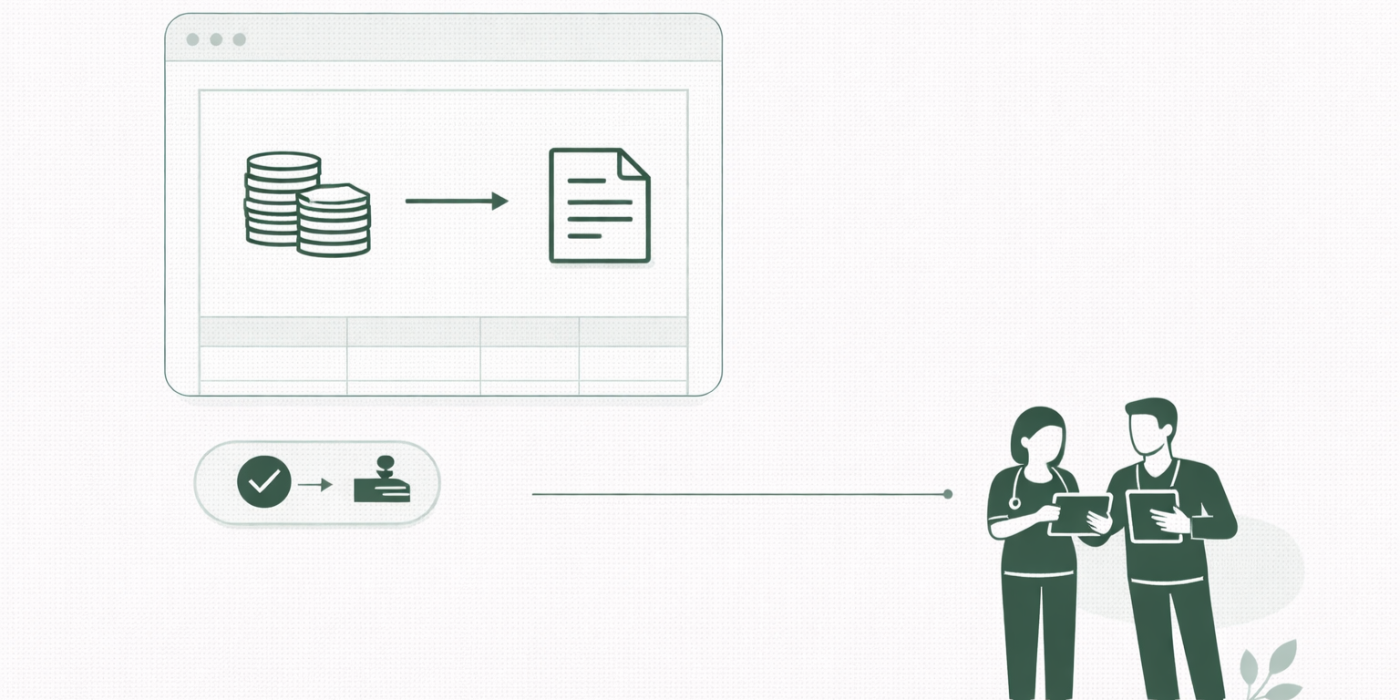
1. Why Payment Posting Is One of the Most Important Revenue Cycle Control Points
Payment posting sits at the moment where assumptions stop and financial reality begins. Before posting, a practice may believe a claim was handled correctly, a payer performed as expected, and a balance is collectible. Once the remittance is posted, the organization finally sees what actually happened. That is why payment posting should be tightly connected to mastering revenue cycle management complete guide, guide to accurate medical billing and reimbursement, revenue cycle metrics amp KPIs terms amp definitions, and guide to medical coding revenue leakage prevention.
The common mistake is to think payment posting is mainly about speed. Speed matters, but speed without interpretation is dangerous. A posting team can process high volume and still quietly bury underpayments, post incorrect contractual adjustments, misroute denial balances, and leave patients holding balances they never owed. That creates downstream chaos in comprehensive guide to denials prevention and management, weakens decision-making in explanation of benefits EOB comprehensive guide, complicates follow-up tied to guide to claim adjustment reason codes CARCs, and blurs the insight teams need from remittance advice remark codes RARCs comprehensive dictionary.
Payment posting also determines whether the data leadership sees is trustworthy. If contractuals are overstated, net revenue looks lower than it should. If patient responsibility is misposted, patient A/R becomes inflated. If takebacks are not separated clearly, payer performance looks worse or better than reality depending on how the transaction was booked. If unapplied cash sits unresolved, the department may think money is on the books while the ledger is still operationally compromised. This is why mature teams connect posting decisions with medical billing practice management systems terms defined, guide to revenue cycle management software terms, understanding medical coding automation terms ambci, and revenue cycle management RCM terms explained.
The deeper reason posting matters is that it reveals what the claim lifecycle actually produced. Coding may have been correct. Submission may have been timely. Eligibility may have looked clean. But if the payer reduced reimbursement, shifted cost to the patient incorrectly, or recouped prior dollars, payment posting is where those outcomes become visible. A strong department does not just record that information. It challenges it, classifies it correctly, and routes it intelligently.
Payment Posting Terms That Directly Affect Cash Flow (25+ Rows)
| Term | Meaning | Why It Matters | Best Practice |
|---|---|---|---|
| Payment Posting | Recording payer and patient payments, adjustments, and balances | Determines real reimbursement outcome | Treat it as financial interpretation, not data entry |
| Remittance Advice | Payer explanation of payment, denial, and adjustment activity | Drives balance accuracy and follow-up | Review remit logic before posting blindly |
| 835 | Electronic remittance advice transaction | Feeds automated posting workflows | Audit mapping and exceptions regularly |
| EOB | Explanation of benefits showing payer adjudication | Clarifies patient liability and reductions | Cross-check against account balance after posting |
| Allowed Amount | The maximum recognized reimbursable amount | Sets the ceiling for valid reimbursement | Compare against fee schedule or contract logic |
| Paid Amount | What the payer actually paid | Shows cash received, not necessarily cash owed | Investigate low payments for variance |
| Adjustment | Any reduction or reclassification applied to a charge | Changes revenue, A/R, and patient billing | Use disciplined categories, not generic buckets |
| Contractual Adjustment | Write-down required by payer agreement | Should reflect expected pricing differences only | Do not use it to hide underpayments |
| Patient Responsibility | Amount assigned to the patient after adjudication | Impacts statements and collections | Validate before moving balance to patient billing |
| Deductible | Patient-paid amount before payer coverage starts | Can create incorrect patient bills if misposted | Check against coverage and remit details |
| Copay | Fixed patient share | Affects front-end and final balance accuracy | Reconcile collected copays against remit outcome |
| Coinsurance | Percentage-based patient share | Changes collectible balance substantially | Teach staff to distinguish it from deductible |
| CARC | Claim Adjustment Reason Code | Explains why a payment changed | Map each code to a posting or follow-up rule |
| RARC | Remittance Advice Remark Code | Adds detail to payer action | Interpret with CARCs, not alone |
| Underpayment | Payer paid less than expected | Creates direct revenue loss | Flag instead of automatically adjusting off |
| Overpayment | Payer paid more than expected | Creates refund or recoupment risk | Segregate and review promptly |
| Takeback | Recovery of previously issued payment | Can distort current-period cash and account balance | Link it to the original claim and reason |
| Recoupment | Formal payer retrieval of prior reimbursement | May signal compliance or duplicate payment problems | Route to dedicated review before final resolution |
| Unapplied Cash | Cash received but not matched correctly | Makes reporting and reconciliation unreliable | Set ownership and aging controls |
| Credit Balance | Negative account balance due to excess payment | Creates refund and compliance exposure | Review routinely and resolve fast |
| Secondary Balance | Residual amount potentially billable to a second payer | Delays reimbursement if ignored | Trigger next-bill workflow immediately |
| COB | Coordination of benefits between multiple payers | Affects payer order and patient balance logic | Verify sequencing before billing patient |
| PLB | Provider-level balance adjustment in 835 files | Can change payment totals without tying to one claim | Reconcile separately from claim-line posting |
| Auto-Posting | System-based payment posting using electronic remit data | Increases speed but can scale mapping errors | Use thresholds and QA review |
| Exception Queue | Claims requiring manual review after posting attempt | Prevents bad automation from corrupting balances | Prioritize by financial risk and aging |
| Variance | Gap between expected and actual reimbursement | Signals underpayment, pricing, or coding issues | Track by payer, provider, and service line |
| Reconciliation | Matching posted transactions to remit and deposit totals | Protects ledger integrity | Perform daily with documented review |
| Write-Off | Removal of balance deemed uncollectible or invalid | Affects net revenue and compliance risk | Require reason discipline and approval paths |
| Refund | Return of excess payment to payer or patient | Poor handling creates compliance and trust issues | Track refund liabilities separately |
| Posting Lag | Time between receipt and completed posting | Delays balance accuracy and next-step action | Measure by payer and posting channel |
2. Core Payment Posting Terms Every Billing Professional Must Understand
The first concept every team must understand is that a posted payment is not the same thing as a correct reimbursement outcome. A payer may issue payment, but that payment can still be incomplete, misapplied, or financially misleading. That is why payment posting should be grounded in reference understanding Medicare reimbursement fully, guide to physician fee schedule terms, commercial insurance billing terms essential guide, and future of Medicare amp Medicaid billing regulations what coders must know.
Start with the allowed amount. This is not just a number on a remit. It is the benchmark that helps determine whether the payer complied with pricing expectations. If the paid amount plus valid patient responsibility does not reconcile to the allowed amount correctly, something deserves investigation. Teams that do not understand this often convert true underpayments into casual contractual write-downs. That mistake directly weakens performance in impact of coding accuracy on hospital revenue 2025 report, hides trends seen in hospital reimbursement rates by specialty complete 2025 analysis, and undermines findings that should feed revenue cycle management efficiency original metrics amp benchmarks report.
Then there is patient responsibility, one of the most operationally sensitive posting outcomes in the entire cycle. A deductible, copay, or coinsurance balance must move to the patient only when payer adjudication supports it and benefit logic makes sense. If staff post patient liability lazily, the practice can send inaccurate statements, create unnecessary patient frustration, and damage collections trust. This is why posting must align with dictionary patient responsibility amp copay terms clarified, understanding coordination of benefits COB clear definitions, medical claims submission process step by step guide, and clearinghouse terminology guide for medical coders.
CARCs and RARCs are equally critical because they explain payer logic. They are not decorative data points for reports. They tell the team whether the balance reflects a denial, a reduction, an informational note, an eligibility issue, or a contractual outcome. When staff do not understand these codes, they post amounts without knowing what action the balance should trigger. That weakens coordination with coding denials management comprehensive analysis amp best practices, muddies performance issues found in top 10 most common medical coding errors and how to avoid them, and makes corrective action harder across guide to medical coding regulatory compliance and understanding coding edits modifiers complete guide.
Finally, teams need to understand unapplied cash, credit balances, takebacks, and PLBs because these are not minor cleanup items. They are often where accounting noise, compliance exposure, and reconciliation failures accumulate. A department can look busy and still be quietly losing control if these categories are not governed tightly.
3. The Biggest Payment Posting Errors That Cause Silent Revenue Leakage
Most revenue leakage from payment posting does not come from dramatic breakdowns. It comes from ordinary-looking entries that nobody questions. That is what makes posting mistakes so dangerous. They blend into the workflow, pass through the ledger, and only become visible after months of lower-than-expected collections or ugly cleanup projects.
The first major error is using the contractual adjustment bucket too casually. Teams under pressure to clear work often treat any unpaid remainder as contractual. That is disastrous because it converts potentially collectible reimbursement into normalized write-down. Once that happens, the organization loses both the money and the visibility. This weakens performance management tied to revenue leakage in medical billing original industry data amp insights, distorts comparisons in predicting changes in healthcare reimbursement models by 2027, and can mask financial signals discussed in healthcare cost reporting essentials for billing specialists.
The second error is poor handling of secondary balances. Primary payments get posted, but the remaining balance sits because staff did not interpret the remit properly, the system did not launch a crossover or secondary bill, or ownership for the next step was unclear. That problem adds avoidable aging, delays reimbursement, and sometimes leads to incorrect patient billing. It also creates avoidable friction with understanding coordination of benefits COB clear definitions, commercial insurance billing terms essential guide, guide to accurate medical billing and reimbursement, and medical billing practice management systems terms defined.
A third error is blind trust in ERA auto-posting. Automation can save time, but weak mapping logic can scale bad decisions faster than manual posting ever could. If the system maps denials incorrectly, misclassifies takebacks, or rolls underpayments into contractuals, the practice ends up with fast processing and bad financial truth. That is why auto-posting must be governed with help from understanding medical coding automation terms ambci, guide to revenue cycle management software terms, complete reference for encoder software terms, and future innovations in medical billing software amp financial management.
Another costly error is poor control over credit balances and unapplied cash. These problems usually signal weak reconciliation discipline, but they also create compliance exposure and patient trust issues. If excess funds remain unresolved, refunds may be delayed, statements may be wrong, and leadership may not have a clean view of true collectible A/R. This is where payment posting stops being an isolated operational issue and becomes a governance issue.
Quick Poll: What is your biggest payment posting pain right now?
4. How to Build a Payment Posting Workflow That Protects Cash and Reduces Rework
A strong payment posting workflow does more than record numbers. It creates a clear chain from payment receipt to account resolution. Every posted transaction should lead to one of several reliable outcomes: closed balance, valid patient responsibility, secondary billing, denial work, underpayment escalation, refund review, or exception handling. If the team cannot say which path each posted result belongs to, the workflow is incomplete.
The first requirement is disciplined reconciliation. Payments must tie cleanly from deposits to remittance totals to account-level posting. Without that foundation, the organization cannot trust cash, cannot explain discrepancies quickly, and cannot keep its ledger clean. This operational discipline should align naturally with guide to effective payment posting and management, understanding cost reporting in medical billing, understanding medical coding audits comprehensive guide, and revenue cycle metrics amp KPIs terms amp definitions.
The second requirement is category discipline. Teams should not rely on vague “adjustment” logic. Contractual reductions, denial-related balances, patient-responsibility balances, takebacks, refunds, and unapplied cash all need separate treatment. Without that structure, reporting becomes blurry and operational follow-up becomes slow. Managers cannot tell whether the problem is payer pricing, coding quality, registration accuracy, or weak posting logic.
The third requirement is intelligent exception handling. Exception queues should be organized by financial risk and root cause, not merely by payer or date. A large underpayment deserves faster review than a low-dollar informational adjustment. A PLB deserves separate accounting attention. A secondary crossover failure should be resolved before patient billing is triggered. High-performing teams use payment posting to launch the right next action immediately instead of letting bad balances sit in neutral.
The fourth requirement is feedback. Payment posting should feed the rest of the revenue cycle. If one payer repeatedly underpays a service line, contracting and follow-up teams should know. If patient balances are rising because deductible posting patterns changed, front-end verification should know. If takebacks increase after a documentation issue, coders and CDI leaders should know. Posting is not the end of the workflow. It is one of the clearest diagnostic signals in the whole system.

5. Best Practices for Training Payment Posting Teams to Catch What Systems Miss
The best payment posters do not just know how to enter transactions. They know how to doubt the wrong ones. They recognize when a contractual looks suspicious, when a patient balance does not make sense, when a remit message suggests deeper claim failure, and when automation should be challenged instead of trusted. That judgment is what separates fast posting from protective posting.
The best training method is scenario-based training using real remit patterns. Staff should practice posting underpayment cases, takeback cases, deductible misallocations, secondary payer carryovers, and PLB situations. They should be asked what the transaction means operationally, not just where to click. This approach works well alongside healthcare billing acronyms comprehensive dictionary amp examples, medical coding workflow terms complete reference, dictionary terms for coding education amp training, and essential study strategies for medical coding students.
Role-based training also matters. Staff working primary posting need strong understanding of remit structure and adjustment logic. Those handling exceptions need deeper exposure to denial patterns, underpayment analysis, and refund risk. Supervisors need enough fluency to identify trend signals instead of only monitoring volume. This becomes even more valuable when supported by guide to coding career development essential terms, step by step guide starting a career in medical billing and coding, career guide how to become a revenue cycle manager, and future skills medical coders need in the age of AI.
Teams should also be trained on “high-cost confusion pairs.” Contractual versus underpayment. Patient responsibility versus non-covered denial. Takeback versus current-period reduction. Applied cash versus unapplied cash. Informational remark versus actionable denial indicator. These pairs are where revenue leaks because they look deceptively similar in busy workflows.
Finally, quality metrics must matter as much as speed. A posting team that clears volume but misses underpayments, leaves credit balances unresolved, or creates inaccurate patient balances is not performing well, no matter how many transactions it finishes. Better measures include underpayment detection rate, unapplied cash aging, credit balance resolution speed, exception rework volume, and downstream balance accuracy.
6. FAQs About Payment Posting in Medical Billing
-
Payment posting is the process of recording payer and patient payments, adjustments, denials, and any remaining balances against claims or accounts. It turns remittance information into actionable account status and determines whether a balance should close, transfer, escalate, or remain open.
-
Because it is where the organization confirms what it truly got paid. Payment posting affects cash visibility, A/R accuracy, patient statements, denial follow-up, refund obligations, and contract performance analysis. If posting is weak, the whole revenue cycle becomes less trustworthy.
-
A contractual adjustment is an expected write-down based on payer agreement or fee schedule rules. An underpayment happens when the payer reimburses less than what should have been paid under those rules. Confusing the two is one of the fastest ways to normalize lost revenue.
-
They should interpret them as action signals. CARCs explain why payment changed, while RARCs add detail and context. Together they help determine whether the balance belongs in denial follow-up, secondary billing, patient billing, refund review, or underpayment escalation.
-
No. Auto-posting can reduce labor, but it cannot safely replace oversight. If the mapping rules are weak, automation can spread posting errors at scale. Strong departments use auto-posting with exception queues, tolerance thresholds, and QA audits.
-
The biggest pain points are missed underpayments, lazy contractual write-offs, incorrect patient balance transfers, unresolved secondary balances, poor interpretation of remittance codes, unapplied cash buildup, and takebacks or credit balances that are not handled cleanly.
-
It affects patient trust directly. If patient balances are posted incorrectly, statements become confusing, disputes increase, and collection relationships worsen. Accurate payment posting protects both cash and credibility.
-
Start by tightening adjustment categories, auditing auto-posting rules, training staff on real remit scenarios, separating underpayments from contractuals, monitoring unapplied cash aggressively, and building exception queues based on financial risk rather than general backlog.
