
Directory of Workers' Compensation Billing Resources
Workers’ compensation billing breaks down when a practice treats it like ordinary commercial insurance. The payer path is different, the proof burden is different, the claim identifiers are different, and one missing authorization, injury detail, employer record, or adjuster note can freeze reimbursement for weeks. This directory gives AMBCI readers a practical resource map for workers’ compensation billing, connecting intake, documentation, coding, claim submission, follow-up, and payment review with stronger healthcare claims management, accurate reimbursement, medical necessity criteria, and revenue cycle management.
1. Why Workers’ Compensation Billing Needs Its Own Resource Directory
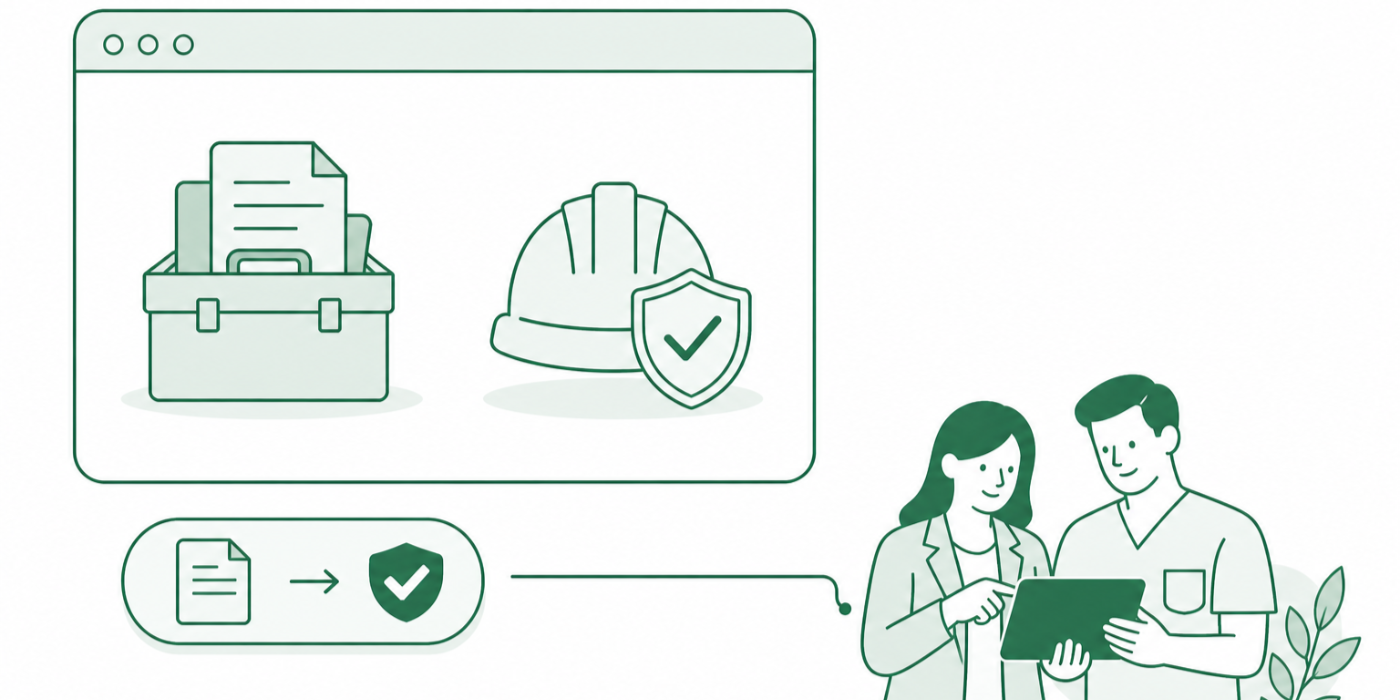
Workers’ compensation billing is built around an injury claim, not a standard health plan benefit. The billing team must confirm the employer, date of injury, claim number, body part, adjuster, carrier, third-party administrator, authorization rules, fee schedule, and accepted condition before releasing charges. A clean CPT code can still stall when the injury relationship is unclear, the claim number is missing, or the payer says the service exceeded the accepted body part. That is why workers’ compensation workflows need tighter charge capture controls, sharper clinical documentation improvement, stronger medical coding workflow, and disciplined claims reconciliation.
The billing risk begins before the patient is seen. A front desk team may collect a commercial card, but the visit may belong to an open injury claim. A provider may document pain, but the chart may fail to connect the treatment to the work incident. A biller may submit correctly formatted charges, but the adjuster may need notes, work status, causation language, or authorization history before payment. Every missed handoff creates avoidable aging. Strong teams connect workers’ compensation billing with encounter forms and superbills, SOAP notes and coding, problem list documentation, and medical record retention.
A useful resource directory must cover more than forms and portals. It should tell the billing team what to verify, where claims fail, which documents matter, how to track follow-up, and how to interpret payment outcomes. Workers’ compensation billing depends on operational discipline: employer verification, adjuster communication, authorization logging, note attachment, fee schedule review, denial tracking, appeal deadlines, and underpayment recovery. Those skills overlap with revenue cycle metrics, payment posting, EOB interpretation, and CARC code analysis.
Workers’ Compensation Billing Resources Directory: What to Use, Why It Matters, and What to Check
| Resource | What It Helps Confirm | Billing Risk It Controls | Best Practice Action |
|---|---|---|---|
| Employer injury intake form | Employer name, incident date, injury location, body part, and job-related details | Wrong payer path and weak injury linkage | Tie intake to encounter forms and superbills before charges are created |
| Claim number tracker | Open claim number assigned by carrier or third-party administrator | Unmatched claims, delayed routing, and avoidable rejection | Require claim number validation in claims management worklists |
| Carrier and TPA directory | Correct payer, mailing address, portal, electronic route, and contact channel | Misrouted claims and lost follow-up | Map each payer through clearinghouse terminology and payer setup notes |
| Adjuster contact log | Adjuster name, phone, email, fax, claim status, and requested documentation | Poor communication and repeated documentation requests | Store communication in practice management systems |
| Accepted body-part record | Which injury areas the payer has accepted for treatment | Denials for unrelated conditions or unsupported treatment areas | Cross-check provider notes with problem list documentation |
| Authorization checklist | Approved visits, therapy sessions, imaging, procedures, and specialty referrals | Services billed outside authorization scope | Link authorization controls to medical necessity criteria |
| Work status form | Return-to-work status, restrictions, modified duty, and follow-up plan | Missing payer-required documentation | Attach work status evidence using medical record retention standards |
| Initial injury report | How the injury happened and whether the visit relates to the workplace event | Causation disputes and claim review delays | Support the claim through SOAP notes and coding |
| State fee schedule reference | Allowed reimbursement rules for workers’ compensation services | Underpayment and incorrect write-offs | Compare payments during payment posting |
| CPT coding reference | Procedure coding for evaluation, treatment, imaging, therapy, surgery, and supplies | Incorrect service reporting and payer disputes | Train coders with CPT modifier guidance |
| Diagnosis specificity guide | Injury location, laterality, acuity, and condition detail | Weak diagnosis support and delayed adjudication | Use coding standards from ICD-11 best practices |
| Referral tracking log | Referring provider, specialist, authorized destination, and visit limits | Unapproved specialist billing and missing records | Coordinate through revenue leakage prevention routines |
| Medical records attachment checklist | Progress notes, imaging reports, operative reports, therapy notes, and work status records | Pending claims due to missing proof | Match records to documentation requirement habits |
| Payer portal directory | Where to upload records, check claim status, send reconsiderations, and view payments | Scattered follow-up and missed payer requests | Document portal actions in RCM software |
| EDI submission guide | Electronic claim route, payer ID, file format, acknowledgments, and rejections | Transmission errors and claim acceptance confusion | Review electronic routing with EDI billing terms |
| Paper claim fallback process | When a carrier requires paper forms, attachments, or special mailing instructions | Lost paper claims and poor proof of timely filing | Use form controls from CMS-1500 terms |
| Timely filing calendar | Submission limits, reconsideration dates, and appeal deadlines | Permanent write-offs from preventable timing failures | Monitor aging with RCM KPIs |
| Denial reason library | Common denial categories, payer language, and correction paths | Repeated denials and slow appeals | Normalize reasons through CARC analysis |
| Remittance review guide | Allowed amount, reductions, denials, patient responsibility, and adjustment explanation | Bad write-offs and missed underpayments | Compare outcomes using EOB guidance |
| Appeal packet template | Claim, notes, authorization, work status, medical rationale, and payment dispute evidence | Weak appeal submissions and missed recovery | Build appeals from audit-ready documentation |
| Underpayment recovery tracker | Expected allowed amount, paid amount, adjustment, and dispute status | Silent revenue loss | Review variances through billing reconciliation |
| Secondary billing decision guide | Whether balances move to another payer, patient, employer, or remain in dispute | Incorrect patient billing and compliance exposure | Use patient responsibility terms cautiously |
| Provider documentation prompt sheet | Causation, functional limitation, work restrictions, treatment plan, and follow-up need | Clinically vague records that stall payment | Improve notes through CDI terms |
| Specialty billing reference | Rules for orthopedics, radiology, physical therapy, occupational medicine, surgery, and pain care | Specialty-specific coding and documentation failures | Use specialty resources like orthopedic CPT coding |
| Security and access policy | Who can view claim records, upload attachments, and communicate with payers | PHI exposure and poor audit trails | Align access with healthcare data security |
| Competency checklist | Staff ability to intake, code, bill, follow up, appeal, and reconcile workers’ comp claims | Inconsistent handling and repeated avoidable errors | Train against coding competency assessment |
2. Intake Resources That Stop Workers’ Compensation Billing Problems Early
The highest-value workers’ compensation resource is a disciplined intake checklist. It should capture the employer, supervisor contact, injury date, claim number, carrier, TPA, adjuster, accepted body part, authorization status, and whether the patient also presented a commercial insurance card. Billing teams lose money when the injury case is discovered after the claim has already gone to the wrong payer. Intake must connect directly to healthcare claims management, encounter form controls, commercial insurance billing, and coordination of benefits.
The intake team should ask whether the visit is initial, follow-up, authorized referral, post-injury therapy, imaging, surgical consult, impairment evaluation, or work status update. Each visit type creates a different documentation burden. A follow-up without work status may get delayed. Therapy without authorized visit limits may be denied. Imaging without accepted body-part support may pend. A surgical consult without adjuster approval may age immediately. Strong billing departments build intake prompts into the practice management system, connect them to EHR documentation terms, and reinforce them through medical coding workflow and coding competency.
Workers’ compensation intake also needs a payer identity resource. One employer may use different carriers, TPAs, networks, or adjusters by state, job category, or injury date. A billing team that guesses based on an old record can send a clean claim to the wrong place. The directory should list payer names, portal links, paper address rules, electronic payer IDs, attachment rules, adjuster contact patterns, and reconsideration instructions. That directory supports EDI billing, clearinghouse terminology, RCM software terms, and billing reconciliation.
3. Documentation and Coding Resources for Workers’ Compensation Claims
Workers’ compensation documentation must answer a payer’s core question: does this service relate to the accepted work injury, and does the record support the level and type of care billed? Generic pain language creates problems. The note should identify the injury mechanism, affected body part, laterality, functional limitation, work restriction, treatment plan, response to treatment, and reason continued care is needed. Coders and billers should review documentation against SOAP note coding, clinical documentation improvement, medical necessity criteria, and problem list standards.
Coding resources should include CPT references, modifier guidance, diagnosis specificity aids, specialty-specific checklists, and payer documentation triggers. Orthopedic injuries, radiology studies, injections, surgery, physical medicine, and occupational health visits each have different risk points. A billing resource library should connect specialty guidance to the services actually billed by the practice. For example, an orthopedic clinic needs orthopedic surgery CPT coding, radiology CPT coding, infusion and injection billing terms, and surgical coding compliance.
The resource library should also explain which denials belong to coding, documentation, authorization, compensability, claim administration, or payment posting. A denial for missing documentation should trigger a record attachment process. A denial for unrelated diagnosis should trigger body-part and diagnosis review. A denial for fee schedule reduction should trigger payment accuracy review. A denial for missing authorization should trigger intake and referral review. This separation helps staff use CARC codes, RARCs, medical coding audit terms, and revenue leakage prevention with better precision.
Quick Poll: What slows your workers’ compensation billing the most?
4. Submission, Portal, and Follow-Up Resources Billing Teams Should Maintain
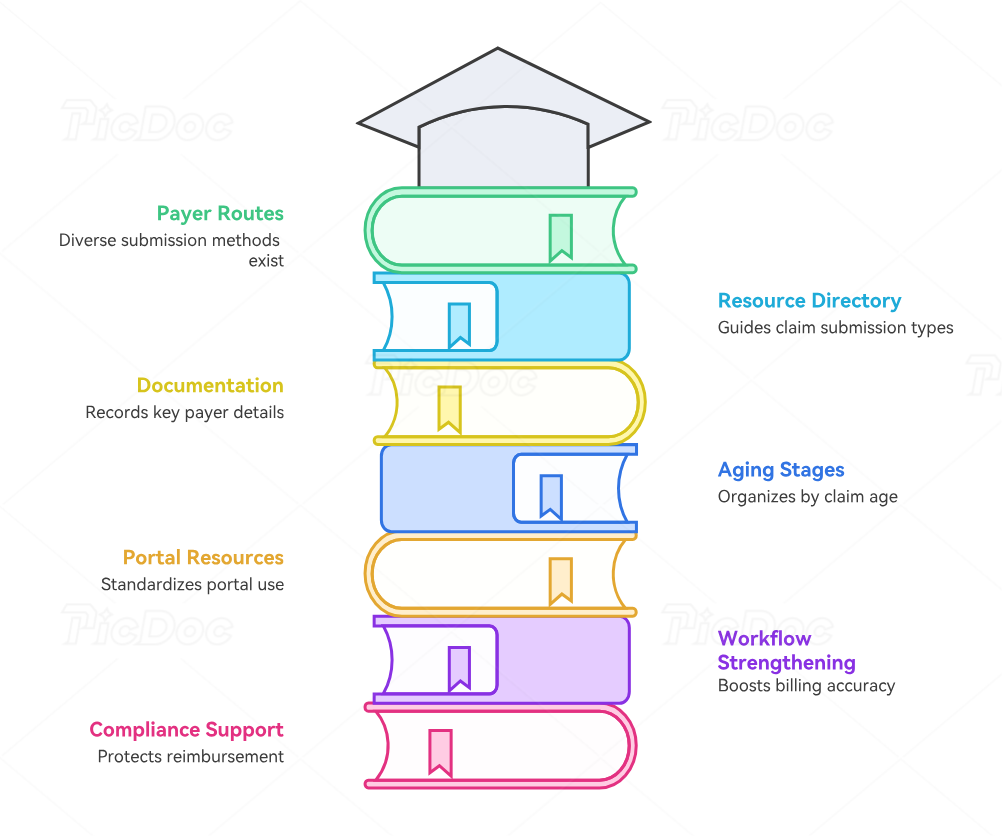
Workers’ compensation claim submission requires a payer route that the billing team can trust. Some carriers support electronic submission, some rely heavily on portals, and some still require paper claims with attachments. A resource directory should show which claims go through EDI, which require portal upload, which require paper submission, and which require notes at the first bill. The team should document payer IDs, mailing addresses, attachment formats, and proof-of-submission rules. This strengthens EDI billing workflows, CMS-1500 form accuracy, clearinghouse setup, and healthcare data security.
The follow-up resource should be organized by aging stage. Claims under 15 days need confirmation of receipt. Claims over 30 days need status review, adjuster contact, or portal check. Claims over 45 days need escalation, missing document review, or payment dispute preparation. Claims over 60 days should be examined for timely filing risk, payer dispute status, and leadership visibility. This prevents “silent aging,” where the claim appears active but nobody owns the next action. Build these stages into RCM metrics and KPIs, claims reconciliation terms, payment posting controls, and collections and bad debt processes.
Portal resources should include login ownership, access roles, document upload steps, status categories, reconsideration paths, and screenshot standards. A staff member should never have to guess where a workers’ compensation claim was submitted, which document was uploaded, who contacted the adjuster, or whether the payer requested another record. Every action should leave an audit trail. This protects reimbursement and supports compliance through medical record retention terms, coding regulatory compliance, healthcare data security terms, and HIM terms.
5. Payment, Denial, and Appeal Resources That Protect Workers’ Compensation Revenue
Payment review is where many workers’ compensation claims lose money quietly. The team may post the payment, accept the adjustment, and move on, even when the allowed amount looks wrong or the denial reason does not match the record. A workers’ compensation payment resource should include fee schedule references, expected reimbursement fields, adjustment categories, appeal instructions, and dispute deadlines. This gives posters a way to separate valid reductions from recoverable underpayments. It also connects daily posting to EOB interpretation, payment posting, billing reconciliation, and revenue leakage prevention.
Denial resources should be practical, not theoretical. The team needs a denial library that says what the denial means, who owns the correction, what evidence is required, which system field may be wrong, which payer contact matters, and when escalation is required. Common categories include missing claim number, non-compensable condition, unrelated body part, missing authorization, missing medical records, duplicate billing, coding mismatch, fee schedule dispute, untimely filing, and incomplete provider information. Tie these categories to claim adjustment reason codes, remittance advice remark codes, medical coding audit terms, and coding query process terms.
Appeal packets should be standardized. A strong packet includes the original claim, denial or payment explanation, progress note, work status form, authorization proof, accepted body-part evidence, operative or imaging report when relevant, and a concise explanation of why the service was related, necessary, and payable. A weak appeal merely resends the claim and hopes for a different outcome. Teams should build appeal quality through clinical documentation improvement, medical necessity support, coding compliance, and coding ethics and standards.
The final resource is a monthly workers’ compensation dashboard. It should show total billed, total paid, outstanding AR, claims by aging bucket, denial category, underpayment disputes, appeal success rate, missing documentation rate, and top payer problems. Without this dashboard, managers hear stories instead of seeing patterns. A dashboard turns one painful claim into a fixable trend. AMBCI learners and billing leaders should connect this reporting habit to data analytics and reporting, RCM KPIs, accurate reimbursement, and professional development in medical coding.
6. FAQs About Workers’ Compensation Billing Resources
-
The most important resource is a complete injury-claim intake checklist because it protects the entire billing path. It should capture the employer, carrier, TPA, adjuster, claim number, date of injury, accepted body part, authorization status, and documentation requirements before the claim is released. This checklist supports encounter forms, healthcare claims management, practice management systems, and medical coding workflow.
-
Workers’ compensation claims require proof that the service relates to a workplace injury and fits the accepted claim. The billing team may need an adjuster, authorization, work status form, injury description, body-part support, medical records, fee schedule review, and appeal tracking. Standard claim formatting alone will not solve those issues. Teams need strong medical necessity criteria, CDI knowledge, medical record retention, and coding compliance.
-
The documentation depends on payer rules and service type, but common support includes progress notes, initial injury history, work status forms, authorization proof, imaging reports, therapy notes, operative reports, and records showing why treatment relates to the accepted work injury. The goal is to remove payer doubt before the claim ages. Billing teams should use SOAP notes and coding, problem list documentation, medical record storage terms, and coding query process terms.
-
Start by classifying the denial: claim number issue, compensability issue, unrelated body part, authorization problem, coding error, missing records, fee schedule dispute, duplicate billing, timely filing, or underpayment. Then assign ownership and build the correction around evidence, not guesswork. The denial workflow should use CARC codes, RARCs, medical coding audit terms, and revenue leakage prevention.
-
A directory reduces AR days by giving staff one clear source for payer contacts, portal steps, electronic payer IDs, paper claim rules, authorization requirements, attachment checklists, appeal deadlines, and underpayment review. Staff can act faster when they do not have to rediscover the same payer process on every claim. The directory should connect to RCM metrics, billing reconciliation, payment posting, and claims management.
-
AMBCI learners should focus on injury intake, claim number verification, employer and adjuster communication, documentation support, authorization tracking, specialty coding, claim submission routes, denial interpretation, appeal packets, payment posting, and underpayment review. These skills prepare learners for real billing work where accuracy and follow-up discipline matter every day. The strongest study path connects coding career development, coding education terms, CBCS exam terms, and coding competency assessment.
